Most American family office executives know that alternatives now account for over $13 trillion in global assets. The drive for portfolio diversification and risk management has fueled interest in complex investment strategies, especially among ultra-high-net-worth investors who seek out nontraditional assets. This overview explains how alternative investments present distinct advantages beyond stocks and bonds, highlighting pathways to greater financial resilience and performance.
Table of Contents
- Defining Alternative Investments And Their Role
- Key Types Of Alternative Asset Classes
- Core Benefits For Family Office Portfolios
- Essential Operational And Legal Requirements
- Risks, Costs, And Common Pitfalls
- Comparing Alternatives To Traditional Investments
Key Takeaways
| Point | Details |
|---|---|
| Alternative Investments Defined | Alternative investments are sophisticated financial assets that go beyond traditional stocks and bonds, providing unique opportunities for portfolio diversification. |
| Key Asset Classes | Major types of alternative assets include private equity, hedge funds, real estate, commodities, and infrastructure, each with distinct risk and return profiles. |
| Benefits for Family Offices | These investments enhance portfolio diversification, mitigate risk, and can lead to higher potential returns, making them vital for family offices. |
| Risk and Complexity | Investors must be aware of the inherent risks like liquidity constraints, complex fee structures, and valuation challenges associated with alternative investments. |
Defining Alternative Investments and Their Role
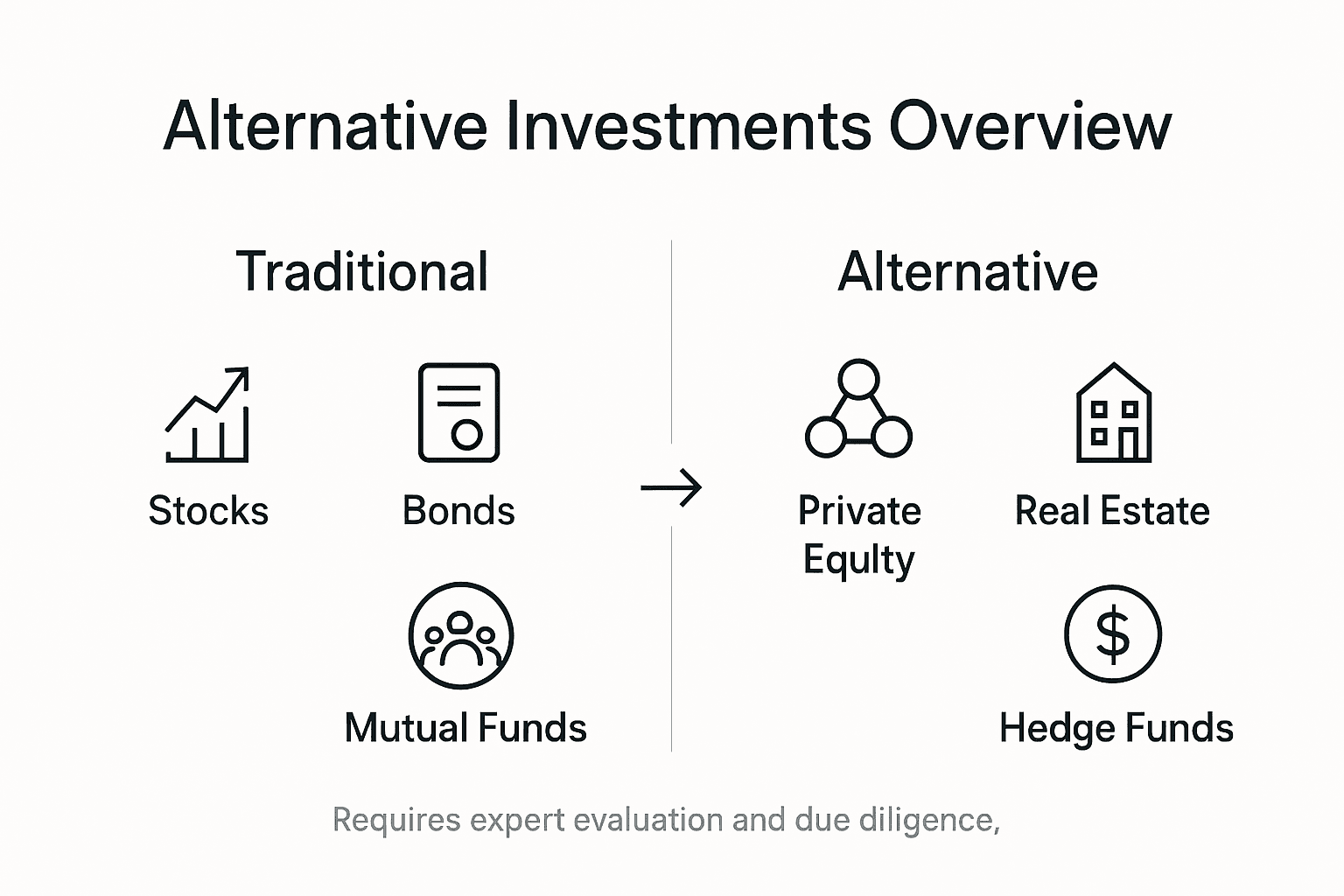
Alternative investments represent sophisticated financial assets beyond traditional stocks and bonds, offering ultra-wealthy investors strategic opportunities for portfolio diversification. These specialized asset classes include private equity, real estate, commodities, hedge funds, and infrastructure investments that provide unique risk management capabilities. Alternative investment strategies typically involve more complex structures compared to conventional investment vehicles.
Unlike standard market-traded securities, alternative investments often require substantial capital commitments and specialized expertise. These investment vehicles are characterized by longer investment horizons, reduced liquidity, and potentially higher return potential. Sophisticated investors leverage alternatives to achieve portfolio goals that traditional assets cannot easily accomplish – such as generating uncorrelated returns, hedging against market volatility, and accessing unique economic opportunities unavailable in public markets.
The core characteristics of alternative investments include:
- Reduced correlation with traditional financial markets
- Potential for higher risk-adjusted returns
- Access to specialized investment strategies
- Enhanced portfolio diversification
- Opportunity for direct asset ownership
Pro tip: Conduct thorough due diligence and consider consulting specialized wealth management professionals when exploring alternative investment opportunities to understand complex risk structures and potential performance implications.
Key Types of Alternative Asset Classes
Alternative asset classes represent sophisticated investment opportunities that extend far beyond traditional market securities. Key alternative investment categories typically include private equity, hedge funds, real assets, and private credit, each offering unique risk and return characteristics for sophisticated investors. These asset classes enable family offices and ultra-wealthy investors to build more resilient and strategically diversified investment portfolios.
Private equity remains a prominent alternative investment category, encompassing strategies like venture capital, growth equity, and leveraged buyouts. Real assets provide tangible investment opportunities through commercial real estate, infrastructure projects, energy investments, and commodities. Hedge funds represent another critical alternative asset class, utilizing complex trading strategies designed to generate returns independent of traditional market movements. These investment vehicles often employ sophisticated techniques like short selling, derivatives trading, and global macro strategies to achieve performance objectives.
The primary alternative investment asset classes include:
Here’s a quick comparison of major alternative asset classes and their unique investment features:
| Asset Class | Investment Focus | Typical Investor Profile | Key Business Impact |
|---|---|---|---|
| Private Equity | Private companies, buyouts | Family offices, institutions | Drives growth, long-term capital |
| Hedge Funds | Complex strategies, trading | Ultra-wealthy, endowments | Enhances risk management, returns |
| Real Estate | Physical property, REITs | Portfolio managers, investors | Provides income, inflation hedge |
| Commodities | Metals, agriculture, energy | Diversification seekers | Volatility buffer, real asset value |
| Infrastructure | Utilities, transport, energy | Long-term investors | Stable returns, economic impact |
| Private Credit | Private loans, direct lending | Yield-focused investors | Custom lending, steady cash flow |
- Private Equity: Investments in privately held companies
- Hedge Funds: Actively managed portfolios using advanced strategies
- Real Estate: Direct property investments and real estate investment trusts
- Commodities: Physical assets like precious metals, agricultural products, and energy resources
- Infrastructure: Investments in transportation, utilities, and communication networks
- Private Credit: Direct lending and debt investment opportunities
Pro tip: Conduct comprehensive due diligence and work with specialized wealth advisors to evaluate alternative investment opportunities, ensuring alignment with your specific risk tolerance and long-term financial objectives.
Core Benefits for Family Office Portfolios
Alternative investments represent a sophisticated strategy for family offices seeking robust portfolio management. Family office investment strategies demonstrate significant advantages through enhanced diversification, risk mitigation, and potential for superior returns. These investments enable ultra-wealthy families to construct more resilient financial portfolios that transcend traditional market limitations.

The core benefits of alternative investments for family offices encompass multiple strategic dimensions. Portfolio diversification remains paramount, with alternatives offering reduced correlation to traditional market assets, thereby minimizing overall investment risk. By allocating capital across unique asset classes like private equity, real estate, and hedge funds, family offices can generate income streams that remain relatively independent of stock market fluctuations. This approach provides greater financial stability and potential for consistent wealth preservation during market turbulence.
Key portfolio benefits include:
- Risk Mitigation: Reduced portfolio volatility
- Diversification: Investments uncorrelated with traditional markets
- Potential Higher Returns: Access to unique investment opportunities
- Inflation Protection: Assets that maintain value during economic shifts
- Long-Term Wealth Preservation: Strategies aligned with multigenerational objectives
Pro tip: Develop a strategic alternative investment allocation that balances potential returns with your family office’s specific risk tolerance and long-term financial goals.
Essential Operational and Legal Requirements
Alternative investments demand rigorous legal and operational frameworks that protect investor interests and ensure comprehensive risk management. Operational due diligence practices represent critical components for family offices navigating complex investment landscapes, requiring meticulous verification of fund structures, manager backgrounds, and potential risk exposures. These comprehensive assessments go beyond traditional investment analysis to scrutinize operational integrity and compliance mechanisms.
The operational requirements for alternative investments encompass multiple sophisticated dimensions. Family offices must conduct thorough background checks on investment managers, verify asset authenticity, assess governance structures, and implement robust monitoring systems. Regulatory compliance demands extensive documentation, transparent reporting, and adherence to securities regulations. This multifaceted approach helps mitigate potential operational risks such as fraud, mismanagement, and strategic misalignment that could compromise investment performance.
Key operational and legal considerations include:
- Comprehensive Due Diligence: Extensive background investigations
- Regulatory Compliance: Adherence to securities and investment regulations
- Risk Management: Systematic identification and mitigation of potential operational risks
- Governance Oversight: Robust monitoring and reporting mechanisms
- Transparency Requirements: Detailed documentation and investor reporting
- Fiduciary Responsibility: Protecting investor interests through rigorous standards
Pro tip: Develop a structured operational due diligence framework that includes comprehensive manager assessments, periodic audits, and continuous risk monitoring to safeguard your alternative investment portfolio.
Risks, Costs, and Common Pitfalls
Alternative investments present sophisticated investors with complex financial challenges that require strategic navigation. Performance risks and investment complexities encompass multiple dimensions beyond traditional market investments, demanding comprehensive understanding and proactive risk management. These investments introduce nuanced financial dynamics that can significantly impact portfolio performance and long-term wealth preservation strategies.
The primary risks associated with alternative investments include substantial structural challenges such as extended liquidity constraints, complex fee structures, and potential performance volatility. Investors must carefully evaluate factors like leverage exposure, manager performance, and potential valuation discrepancies. Sophisticated family offices recognize that alternative investments require more intensive due diligence and ongoing monitoring compared to conventional investment vehicles, with risks ranging from operational failures to potential misalignment of investment strategies.
Key risks and potential pitfalls include:
- Liquidity Constraints: Extended investment lock-up periods
- Fee Complexity: High management and performance fees
- Valuation Challenges: Difficulty in accurate asset pricing
- Leverage Risks: Potential amplification of investment losses
- Performance Variability: Wide performance ranges across different managers
- Operational Risks: Potential fraud or mismanagement
- Transparency Limitations: Reduced reporting and disclosure
Pro tip: Implement a rigorous due diligence framework that includes comprehensive risk assessment, periodic performance reviews, and maintaining a diversified alternative investment portfolio to mitigate potential downside risks.
Comparing Alternatives to Traditional Investments
Alternative investments fundamentally differ from traditional investment vehicles in their approach to generating returns and managing portfolio risk. Investment strategies and market characteristics reveal critical distinctions that sophisticated investors must understand when constructing comprehensive wealth management portfolios. While traditional investments like stocks and bonds offer standardized, liquid market exposures, alternative investments provide more nuanced pathways to potential value creation.
The structural differences between traditional and alternative investments extend far beyond simple asset allocation. Traditional investments typically feature daily liquidity, transparent pricing, and standardized regulatory frameworks. In contrast, alternative investments often involve direct asset ownership, specialized strategies, and longer investment horizons. Sophisticated investors recognize that alternatives can provide uncorrelated returns, potentially reducing overall portfolio volatility and offering access to unique market opportunities not available through conventional investment channels.
Key comparative characteristics include:
The following table summarizes critical differences between alternative and traditional investments:
| Attribute | Traditional Investments | Alternative Investments |
|---|---|---|
| Liquidity | Daily, easily tradable | Lock-ups, restricted exit options |
| Regulation | Highly standardized | Custom frameworks, less standard |
| Valuation | Transparent pricing | Complex, less frequent pricing |
| Fee Structure | Lower, simple | Higher, performance-based |
| Portfolio Role | Core market exposure | Diversification, uncorrelated returns |
- Liquidity: Traditional investments offer immediate trading; alternatives often have extended lock-up periods
- Transparency: Public markets provide real-time pricing; alternative investments may have complex valuation processes
- Fees: Traditional investments have lower management costs; alternatives often include higher performance-based fees
- Return Potential: Traditional assets follow broad market trends; alternatives can generate returns through unique strategies
- Risk Profile: Traditional investments correlate closely with market movements; alternatives may provide more diversified risk exposure
Pro tip: Develop a strategic asset allocation approach that balances traditional and alternative investments, considering your specific risk tolerance, investment horizon, and wealth preservation objectives.
Unlock the Full Potential of Alternative Investments with Future Family Office
Alternative investments offer unique pathways to diversification, risk mitigation, and long-term wealth preservation for ultra-wealthy investors. However, the complexities of operational diligence, regulatory compliance, and selecting the right strategies can be overwhelming. If you are facing challenges like navigating liquidity constraints, managing higher fee structures, or ensuring proper governance and transparency, you are not alone. Understanding these specialized investment vehicles demands access to reliable resources, expert connections, and tailored insights.

Discover how Future Family Office helps you bridge these gaps in knowledge and network. Our platform provides the global family office community with vital tools to access private wealth management opportunities confidently. From connecting with specialized service providers to staying updated on industry trends and best practices, you gain the support needed to build resilient, diversified portfolios incorporating alternative investments. Don’t let operational or strategic pitfalls hold your family office back. Visit Future Family Office now and join a thriving community dedicated to empowering ultra-high-net-worth investors for success.
Frequently Asked Questions
What are alternative investments?
Alternative investments are sophisticated financial assets beyond traditional stocks and bonds, including private equity, real estate, commodities, hedge funds, and infrastructure investments. They offer opportunities for portfolio diversification and unique risk management capabilities.
Why should ultra-wealthy investors include alternative investments in their portfolios?
Ultra-wealthy investors include alternative investments to achieve portfolio goals that traditional assets cannot easily accomplish, such as generating uncorrelated returns, hedging against market volatility, and accessing unique economic opportunities unavailable in public markets.
What are the key benefits of alternative investments for family offices?
The key benefits include enhanced diversification, risk mitigation, potential for superior returns, inflation protection, and strategies aligned with long-term wealth preservation objectives.
What risks are associated with alternative investments?
Key risks include liquidity constraints, complex fee structures, valuation challenges, leverage risks, performance variability, operational risks, and transparency limitations. Investors should conduct thorough due diligence to understand and manage these risks.
Recommended
- Alternatives Investment Benefits: Complete Expert Guide – Future Family Office
- Investment Allocation: Shaping UHNW Family Wealth – Future Family Office
- UHNW Investment Strategies: Tailoring Wealth for Legacy – Future Family Office
- For Family Offices, Private Equity Became Collateral for Cash in the Coronavirus Crisis – Future Family Office
- Complete Guide to Investing in Bespoke Events – Winelands Function – For Every Occasion, Your Celebration
- From Investment to Icon: The Luxury Bags That Will Never Go Out of Style