

Family offices are not short of software. What holds them back is clean data flowing between systems, and the people and time to make those systems work, according to the Family Office Software & Technology Report 2026 from Simple, the leading family office technology & AI advisory.
Simple draws the report from its many touch points with family offices and software vendors, including workshops, calls and direct research. Each of its eight key findings carries a confidence label: Strong or Emerging.
Reporting: the data plumbing is the hard part
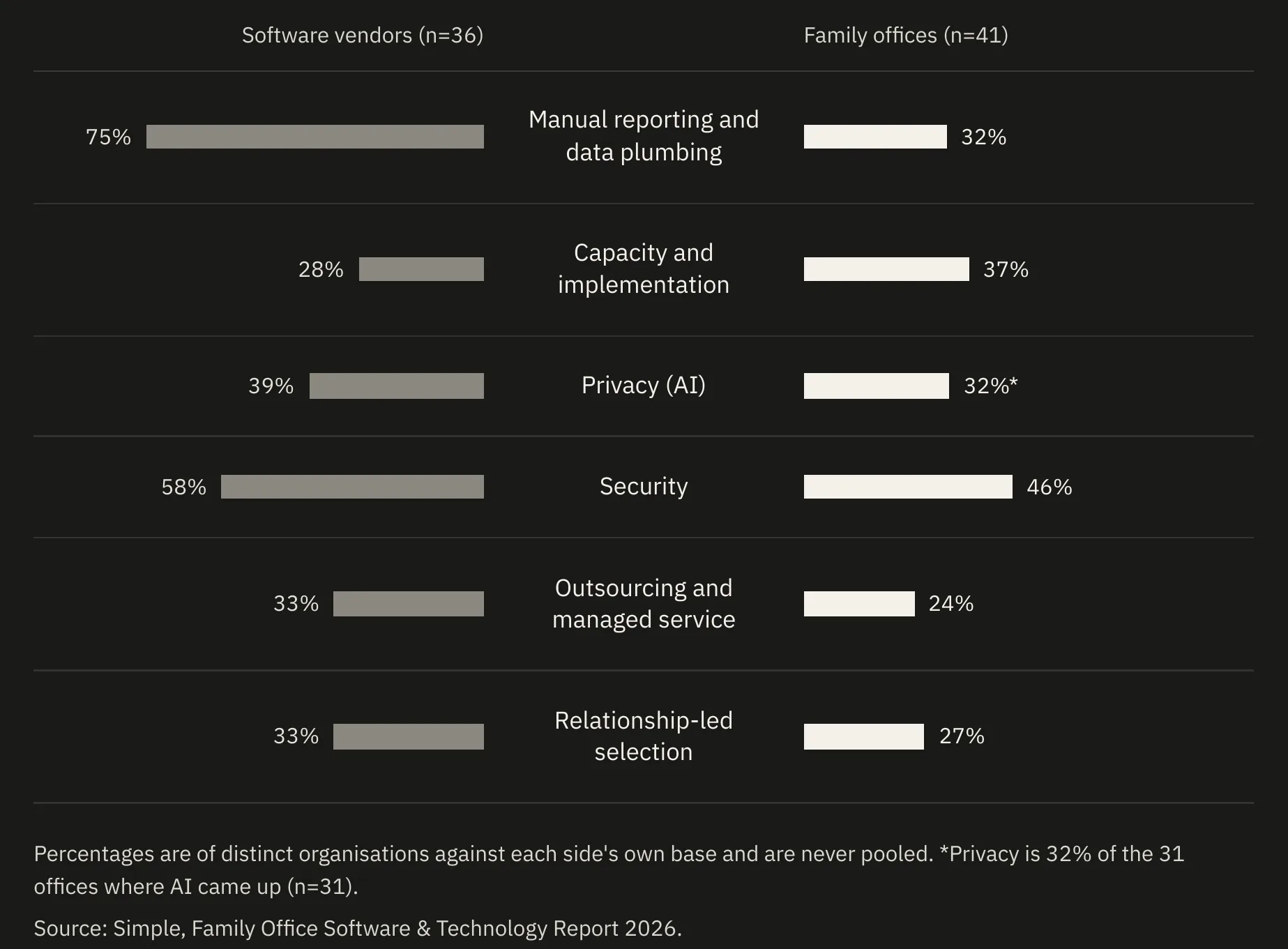
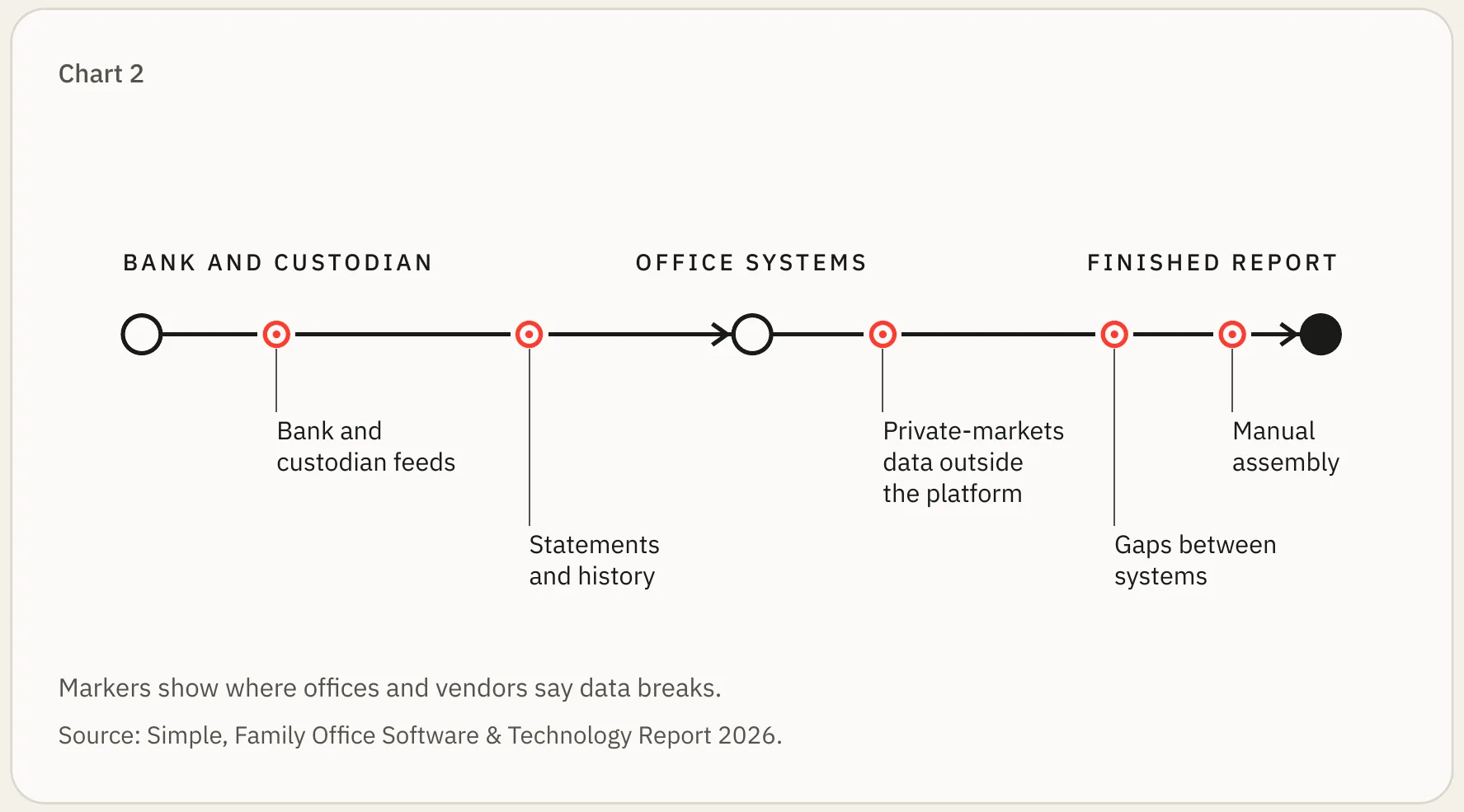
Reporting platforms are spreading, yet some offices still put reporting together by hand on top of them (Strong). Offices and vendors agree that the difficulty is getting clean data in and between systems, not AI. Vendors point mainly at bank and custodian feeds, statements and history, while in some offices private-markets data sits outside the main platform. Several offices said they want clean data and a reliable system of record before they trust AI with anything.
Capacity, not appetite, is the main hurdle
Time, skills and team size hold offices back more than appetite (Strong). A new system takes months of the office’s own time, longer with a lot of history or many banks. Some offices rely on one or two power users, and when that person is busy or leaves, progress stalls.
AI is real, but mostly at assistant level
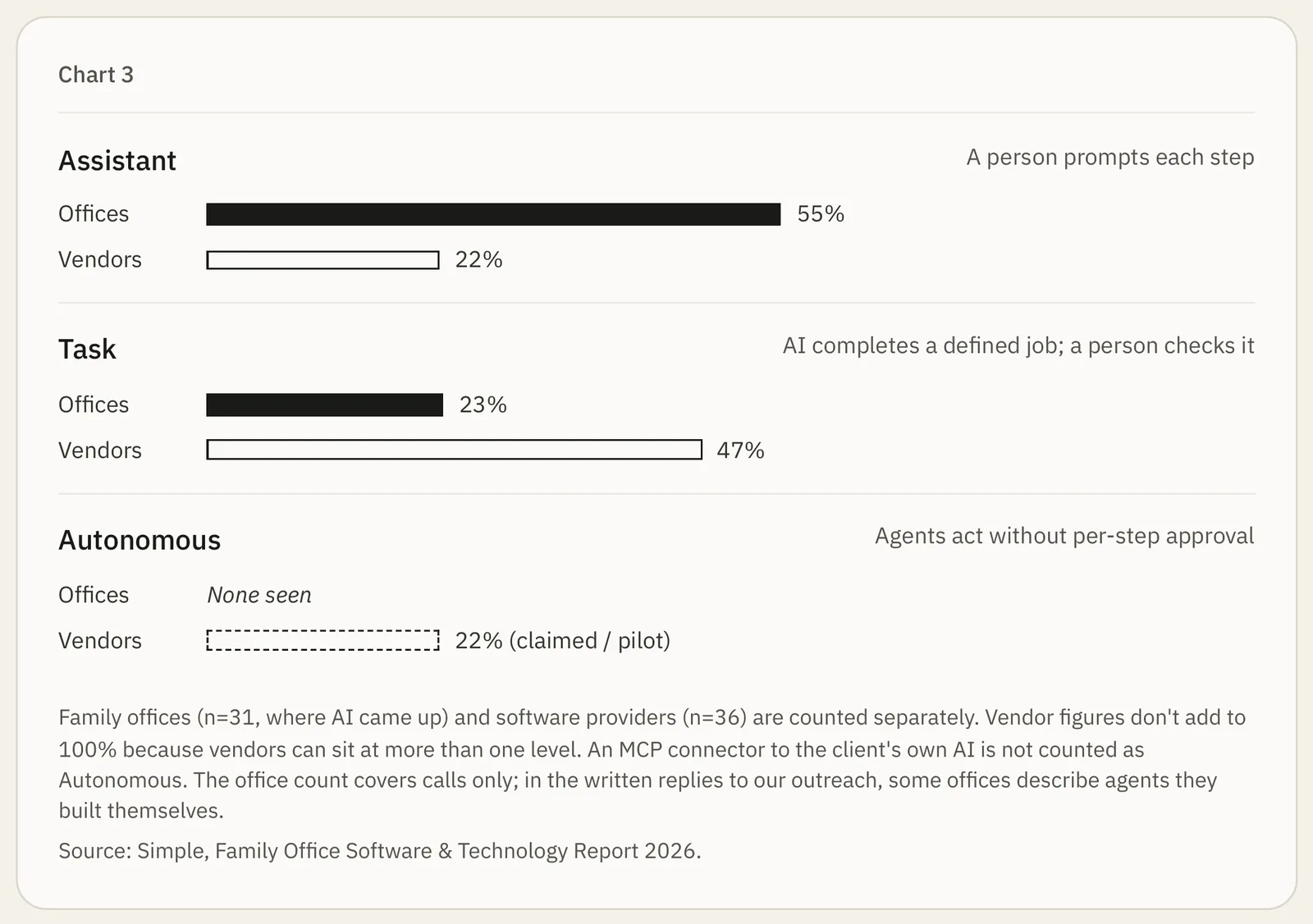
Most offices use AI as an assistant for email, documents and research, with a person prompting each step (Strong). Fewer let AI complete a defined task that a person then checks, and the only agents Simple heard about in offices were ones the office built itself. Vendors sell far more AI than offices describe using, talking about agents and connectors to AI tools, though much of that work is early or in pilot. For offices weighing their options, our guide to the best family office software compares the main platforms.
Privacy and security shape how far AI goes
Privacy is the main AI worry (Strong). Vendors answer it by keeping AI inside their own platform or the client’s environment, or out of sensitive work, and some sell data sovereignty as a feature. Where offices describe controls, they set a policy first, approve the tools and keep sensitive data apart from what AI can see. Simple adds that nobody yet measures the controls offices actually have in place.
Security is both a worry and a buying criterion (Strong). Offices check it when they choose software, and vendors sell it through hosting and jurisdiction: where the data sits and under which rules.
Outsourcing, selection and building in-house
Three findings are labelled Emerging. Offices hand IT to outside providers, but reporting appears to stay in-house, while some vendors now offer to run data operations as a managed service. References and relationships play a large part in how software is chosen, and selection looks structured mostly where an adviser runs it. Several offices now build their own tools with AI coding tools, often for the first time, and treating a build as a product, with an owner, a roadmap and upkeep, is new to many. The pattern Simple suggests watching is to buy the plumbing and build the view.
For family offices, the message is that the next gains are likely to come from cleaner data, enough internal capacity and clear rules on where data goes, rather than from more software.
Source: Simple, Family Office Software & Technology Report 2026.