

Nearly half of American families with significant assets report unresolved conflicts as a major threat to preserving their wealth. Family governance matters because it influences not just bank balances but also family relationships and the future of generational prosperity. Understanding what family governance really is—and clearing up common myths—reveals practical ways families can work together to protect assets, shape their legacy, and create lasting unity.
Table of Contents
- Defining Family Governance And Common Misconceptions
- Key Structures And Mechanisms In Family Governance
- Types Of Family Governance Models And Their Uses
- Role Of Family Governance In Succession Planning
- Mitigating Risks And Resolving Conflicts Effectively
Key Takeaways
| Point | Details |
|---|---|
| Importance of Family Governance | Family governance establishes a structured framework for managing wealth and promoting decision-making across generations. It goes beyond wealth preservation to foster collaboration among family members. |
| Common Misconceptions | Many believe that family governance is only for wealthy families or that it is overly complex. In reality, all families can benefit from establishing governance systems. |
| Governance Models | Different governance models, including self-governance and professional management, cater to varying family dynamics and business complexities, promoting flexibility and strategic management. |
| Conflict Resolution | Strong family governance provides mechanisms for effective conflict resolution, turning potential disagreements into opportunities for deeper understanding and collaborative wealth management. |
Defining Family Governance and Common Misconceptions
Family governance represents a strategic framework through which wealthy families manage their collective financial resources, values, and long-term objectives. Unlike traditional financial management, family governance transcends mere wealth preservation by creating structured systems for collaborative decision-making and intergenerational wealth transfer.
At its core, family governance involves establishing formal mechanisms that enable families to collectively address complex financial decisions. Comprehensive governance systems often include creating family councils, developing constitutions that articulate shared values, and implementing transparent communication protocols. These frameworks help prevent potential conflicts, align individual family members’ goals, and maintain unity across generations.
Common misconceptions about family governance can prevent families from implementing these critical strategies. Many assume that such systems are only necessary for extremely wealthy families or large family businesses. However, families across different economic spectrums can benefit from structured governance. Key misunderstandings include:
- Believing family governance is too complicated or expensive
- Thinking only business-owning families require formal governance structures
- Assuming younger generations will automatically understand family wealth management
- Perceiving governance as restrictive rather than empowering
Successful family governance transforms wealth management from a transactional process into a collaborative, forward-thinking approach. By establishing clear communication channels, defining shared values, and creating decision-making frameworks, families can protect their financial legacy while nurturing collective understanding and strategic alignment.
Key Structures and Mechanisms in Family Governance
Family governance relies on several critical structural mechanisms designed to facilitate strategic decision-making and maintain long-term family harmony. Effective governance structures encompass multiple formal systems that help families navigate complex financial and interpersonal dynamics with clarity and purpose.
The cornerstone of robust family governance is the family constitution, a comprehensive document that articulates shared values, vision, and specific policies governing wealth management, ownership transfer, and generational expectations. This living document serves as a strategic roadmap, providing guidelines for critical decisions related to business leadership, investment strategies, and philanthropic initiatives. Family governance mechanisms typically include several key components:
- Family Councils: Formal bodies that represent family interests and facilitate collective decision-making
- Regular Family Meetings: Structured gatherings to discuss financial strategy, resolve conflicts, and maintain transparency
- Board of Directors: Oversight group that provides strategic guidance and ensures accountability
- Succession Planning Protocols: Clear frameworks for leadership transition and wealth transfer
Successful implementation of these governance structures requires ongoing commitment, open communication, and a willingness to adapt. Families must view these mechanisms not as rigid constraints but as dynamic tools that evolve alongside their changing financial landscape and interpersonal relationships. By establishing clear roles, expectations, and communication channels, families can transform potential sources of conflict into opportunities for collaborative wealth management and shared prosperity.
Types of Family Governance Models and Their Uses
Family governance models represent sophisticated frameworks designed to manage complex wealth dynamics across generations. Organizational governance mechanisms evolve dynamically, adapting to the family’s changing business and financial landscape, with different approaches serving unique strategic purposes.

Three primary family governance models emerge as particularly effective for wealth preservation and strategic management. The self-governance model works best for smaller, closely-held family enterprises where direct family involvement remains high. In contrast, professionalized management models become critical for larger, more complex family businesses requiring specialized expertise beyond immediate family capabilities.
These governance models typically encompass distinct approaches:
- Entrepreneurial Model: – Direct family control
- Minimal formal structures
- High personal involvement
- Professional Management Model:
- Independent board members
- Specialized external expertise
- Clear separation between ownership and management
- Participative Model:
- Balanced family and professional involvement
- Structured decision-making processes
- Transparent communication channels
Successful family governance requires continuous adaptation. Families must remain flexible, regularly reassessing their governance approach to ensure it meets evolving financial objectives, maintains family unity, and preserves generational wealth. By understanding and implementing appropriate governance models, families can transform potential organizational challenges into strategic opportunities for sustained prosperity.
Role of Family Governance in Succession Planning
Succession planning represents a critical process that transforms generational wealth transfer from a potential source of conflict into a strategic opportunity. Effective family governance mechanisms address fundamental challenges like unresolved interpersonal tensions, lack of formal planning, and entrenched familial expectations that often derail smooth leadership transitions.
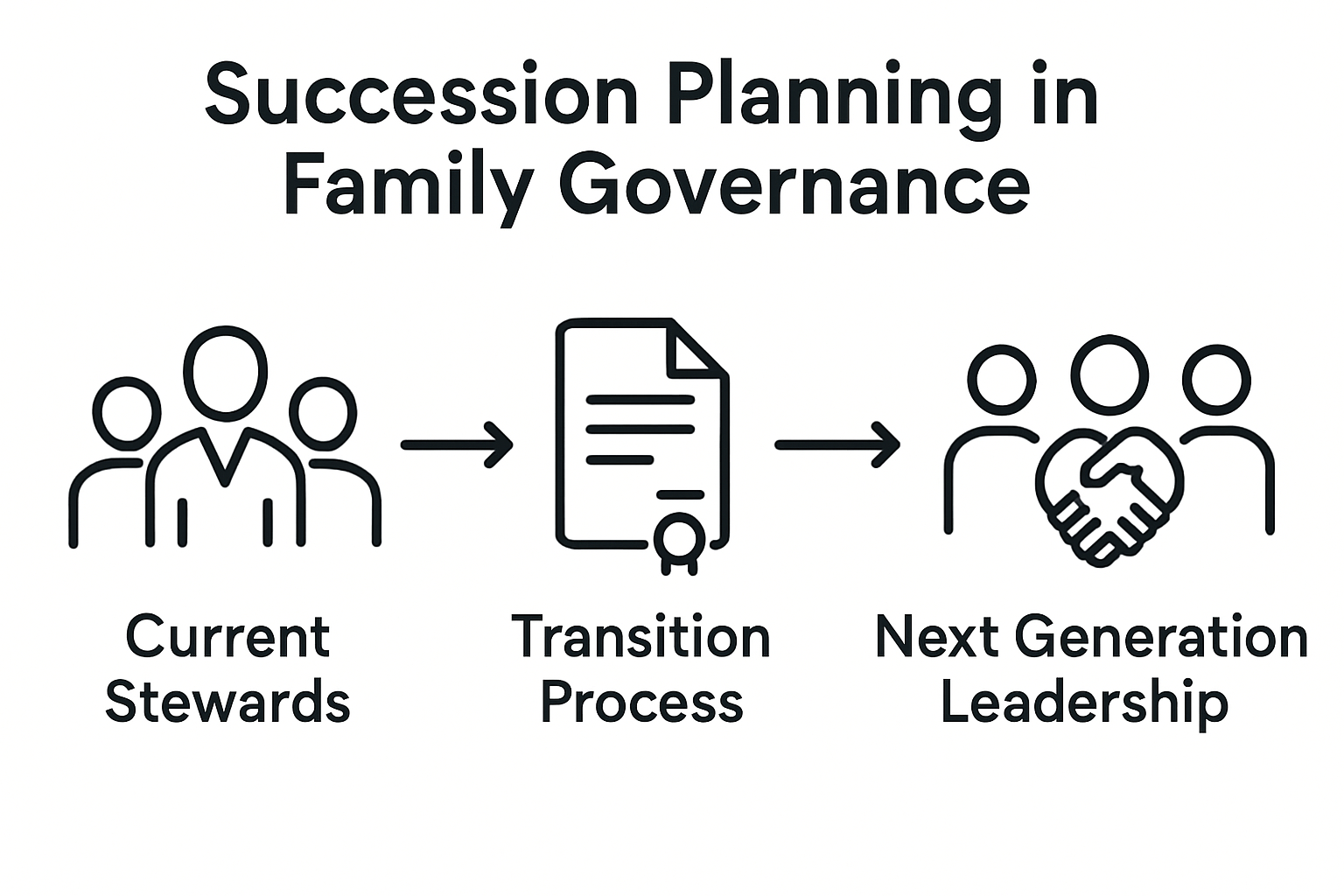
The complexity of succession extends far beyond simply selecting a new leader. Governance structures like family councils and constitutions provide critical frameworks that manage the emotional and strategic dimensions of leadership transfer. These mechanisms ensure transparency, alignment with family values, and a structured approach to navigating potentially sensitive generational shifts.
Key components of effective succession governance include:
- Transparent Communication Protocols:
- Regular family meetings
- Clear documentation of transition expectations
- Open dialogue about leadership criteria
- Skill Assessment Frameworks:
- Objective evaluation of potential successors
- Comprehensive leadership development programs
- Meritocratic selection processes
- Emotional Intelligence Strategies:
- Conflict resolution mechanisms
- Psychological preparation for leadership changes
- Respect for individual family member aspirations
Successful succession planning transcends mere technical processes. It requires creating a holistic ecosystem that balances emotional intelligence, strategic foresight, and structured governance. Families who approach succession as a collaborative, forward-looking journey can transform potential generational conflicts into opportunities for continued growth, innovation, and shared prosperity.
Mitigating Risks and Resolving Conflicts Effectively
Conflict represents an inevitable challenge in family wealth management, requiring sophisticated strategies that go beyond traditional dispute resolution techniques. Robust family governance structures provide critical mechanisms for identifying, addressing, and neutralizing potential sources of tension before they escalate into destructive disagreements.
Formalized conflict resolution processes transform interpersonal challenges from potential threats into opportunities for deeper understanding and strategic alignment. These mechanisms create structured pathways for open communication, ensuring that individual family members feel heard while maintaining the collective focus on long-term wealth preservation.
Effective risk mitigation strategies encompass multiple dimensions:
- Communication Frameworks:
- Establish regular family communication forums
- Create safe spaces for expressing concerns
- Develop active listening protocols
- Dispute Resolution Mechanisms:
- Independent mediation procedures
- Clear escalation pathways
- Neutral third-party intervention guidelines
- Preventative Governance Techniques:
- Transparent decision-making processes
- Documented conflict resolution strategies
- Regular skills training for emotional intelligence
Successful family governance recognizes that conflict is not inherently destructive. When managed strategically, disagreements can become powerful catalysts for innovation, deeper mutual understanding, and more resilient family dynamics. The key lies in creating flexible, compassionate systems that balance individual perspectives with collective goals, transforming potential sources of friction into opportunities for growth and unified strategic vision.
Unlock the Power of Family Governance for Lasting Wealth
Managing wealth across generations is a complex challenge that demands clear communication, structured decision-making, and strategic succession planning. If you recognize the importance of family councils, constitutions, and governance models discussed in the article but feel overwhelmed navigating this space, you are not alone. Many families struggle with aligning values and preventing conflicts while preserving their legacy.
Boldly transform your family wealth management journey with solutions designed to simplify these governance challenges. At Future Family Office, discover a comprehensive platform tailored to ultra-high-net-worth families seeking transparency, expert insights, and meaningful connections. Whether you need access to specialized service providers, governance best practices, or a network of peers who share your goals, the resources you need are at your fingertips.

Take control now and build a resilient family governance framework that safeguards your legacy and nurtures unity. Explore how structured governance can empower your family’s financial future. Start by visiting Future Family Office and connect with a world of expertise and support dedicated to lasting wealth. Learn more about strategic family governance and succession planning by visiting Effective family governance mechanisms and discover insights on Family governance structures. Your family’s wealth deserves a foundation built on clarity and collaboration.
Frequently Asked Questions
What is family governance?
Family governance is a strategic framework that helps wealthy families manage their financial resources, values, and long-term objectives collaboratively, transcending mere wealth preservation.
Why do families need a governance structure?
A governance structure helps families address complex financial decisions, prevents conflicts, aligns individual goals, and maintains unity across generations by creating clear roles and communication channels.
What are the key components of family governance?
Key components of family governance include family constitutions, family councils, regular family meetings, boards of directors, and succession planning protocols.
How can family governance aid in succession planning?
Family governance provides frameworks for transparent communication, skill assessment, and emotional intelligence strategies, ensuring smooth leadership transitions and aligning generational expectations.
Recommended
- Effective governance strengthens family unity and builds a lasting legacy – Future Family Office
- How to Structure Family Governance for Lasting Impact – Future Family Office
- Family Office Governance Principles Explained: Key Standards – Future Family Office
- Governance in Family Offices: Complete Guide for 2025 – Future Family Office
- Understanding Effective Ways to Promote Teamwork – Blog