

More than 85 percent of American investors report that sustainability now influences their financial decisions. This shift reflects a growing awareness that investment choices can shape not just personal wealth but the future of communities and the planet. As sustainable strategies gain traction, understanding how they transform the investment landscape helps both experienced investors and newcomers make informed, responsible choices with lasting impact.
Table of Contents
- Defining Sustainability In The Investment Landscape
- ESG Criteria And Responsible Investment Approaches
- Types Of Sustainable Investment Strategies
- Incorporating Sustainability In Family Office Portfolios
- Risks, Reporting, And Evolving Regulatory Trends
Key Takeaways
| Point | Details |
|---|---|
| Sustainability Integration | Sustainable investing integrates ESG considerations into financial decision-making, reshaping traditional investment practices. |
| Diverse Strategies | Various strategies such as Socially Responsible Investing, ESG integration, and impact investing enable alignment of financial returns with societal impact. |
| Family Office Adaptation | Family offices are increasingly incorporating sustainability as a core component of their investment strategies, balancing financial performance with societal outcomes. |
| Evolving Risk Management | Emerging regulatory trends and advanced technologies are transforming sustainable investment risk assessment and reporting, requiring adaptive strategies from investors. |
Defining Sustainability in the Investment Landscape
Sustainability in investing represents a transformative approach that integrates environmental, social, and governance (ESG) considerations into financial decision making. At its core, sustainable investing moves beyond traditional financial metrics to evaluate an investment’s broader impact on society and the planet. Theoretical frameworks exploring sustainability demonstrate how these strategies fundamentally reshape institutional investment approaches.
The landscape of sustainable investing encompasses multiple interconnected strategies, including Socially Responsible Investing (SRI), Environmental, Social, and Governance (ESG) investing, and impact investing. Each approach shares a common goal: generating financial returns while creating positive societal or environmental outcomes. Systematic reviews highlight the nuanced differences and overlapping conceptual frameworks within these investment strategies, underscoring the complexity of sustainable financial practices.
Key characteristics of sustainable investing include:
- Proactive screening of investment opportunities based on ethical and environmental criteria
- Long term perspective on value creation beyond quarterly financial performance
- Engagement with companies to drive meaningful organizational change
- Prioritization of investments that demonstrate strong sustainability practices
Ultimately, sustainable investing represents a sophisticated approach that recognizes financial performance and societal impact are not mutually exclusive. Institutional investors and family offices are increasingly recognizing that robust ESG practices can drive innovation, manage risk, and create meaningful value across investment portfolios.
ESG Criteria and Responsible Investment Approaches
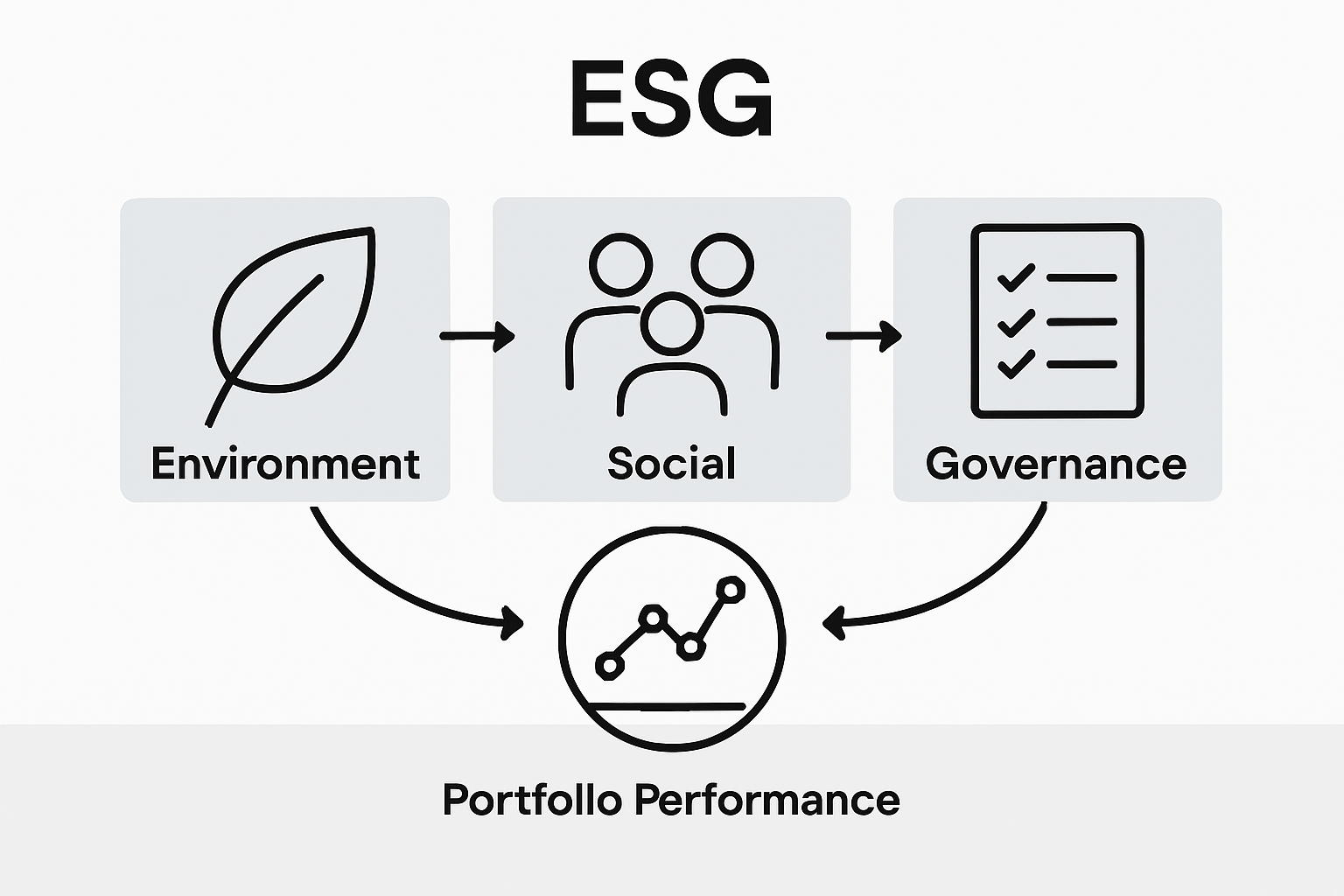
Environmental, Social, and Governance (ESG) criteria have become a critical framework for evaluating investments beyond traditional financial metrics. Comprehensive forensic reviews of ESG risk assessment tools reveal that environmental factors are particularly significant in shaping investment strategies. These multidimensional criteria help investors assess the sustainability and ethical impact of potential investments across three fundamental dimensions.
Responsible investment approaches integrate ESG considerations into financial decision making through sophisticated screening and evaluation processes. Literature reviews exploring Socially Responsible Investment (SRI) demonstrate that these strategies contribute meaningfully to sustainable development while managing potential investment risks. Investors increasingly recognize that financial performance and societal impact are interconnected, not mutually exclusive objectives.
Key components of ESG criteria include:
- Environmental Factors: Carbon emissions, resource management, climate change resilience
- Social Factors: Labor practices, human rights, community engagement, diversity and inclusion
- Governance Factors: Corporate transparency, board accountability, ethical leadership, shareholder rights
Institutional investors and family offices are developing increasingly nuanced approaches to integrating ESG principles. Understanding ESG integration strategies enables sophisticated investors to align their portfolios with broader societal and environmental objectives while maintaining robust financial performance. This evolution represents a fundamental shift from viewing sustainability as a peripheral concern to recognizing it as a core component of strategic investment decision making.
Types of Sustainable Investment Strategies
Global research analyzing responsible investment strategies reveals a complex taxonomy of approaches that investors can leverage to integrate sustainability principles into their financial portfolios. These strategies range from negative screening to proactive impact investing, each offering unique mechanisms for aligning financial goals with environmental and social considerations.
The primary sustainable investment strategies include:
- Negative Screening: Excluding investments in companies or sectors with harmful environmental or social practices
- Positive Screening: Actively selecting investments that demonstrate strong sustainability performance
- ESG Integration: Systematically incorporating environmental, social, and governance factors into investment analysis
- Thematic Investing: Focusing on specific sustainability themes like renewable energy or social equity
- Impact Investing: Targeting investments that generate measurable social and environmental benefits alongside financial returns
Portfolio optimization frameworks demonstrate that integrating sustainability metrics can enhance long term investment performance. Impact investing strategies for family offices have evolved to provide sophisticated mechanisms for aligning investment portfolios with broader societal objectives.

Sophisticated investors recognize that sustainable investment strategies are not about sacrificing financial performance, but about identifying more resilient, forward thinking investment opportunities. These approaches enable investors to drive positive change while maintaining rigorous financial standards, transforming sustainability from a peripheral consideration to a core investment strategy.
Incorporating Sustainability in Family Office Portfolios
Research examining mainstream socially responsible investing reveals a transformative approach to integrating sustainability within family office investment strategies. Modern family offices are moving beyond traditional financial metrics to develop comprehensive investment frameworks that balance financial performance with meaningful societal impact.
Two primary approaches characterize sustainability integration in family office portfolios:
- Financial Performance Driven: ESG factors viewed as determinants of corporate value and long term financial sustainability
- Ethical Impact Driven: Investment decisions prioritize social and environmental outcomes alongside financial returns
- Holistic Integration: Comprehensive assessment of environmental, social, and governance factors across investment selections
Contemporary ESG investment studies highlight the nuanced motivations behind sustainable investing strategies. Sustainable wealth management trends demonstrate that family offices are increasingly recognizing sustainability as a critical component of sophisticated investment approaches.
Successful sustainability integration requires a multifaceted strategy that goes beyond simple screening. Family offices must develop robust methodologies for assessing ESG performance, engage actively with portfolio companies, and continuously evolve their approach to align financial objectives with broader societal and environmental goals. This sophisticated approach transforms sustainability from a peripheral consideration to a core strategic imperative in wealth management.
Risks, Reporting, and Evolving Regulatory Trends
Industrial landscape surveys demonstrate that emerging regulatory frameworks are fundamentally transforming sustainable investment risk assessment and reporting mechanisms. The integration of advanced technologies like artificial intelligence is enabling more sophisticated approaches to evaluating environmental, social, and governance (ESG) performance across investment portfolios.
Key challenges in sustainable investment risk management include:
- Data Reliability: Ensuring accurate and consistent ESG metric collection
- Regulatory Complexity: Navigating increasingly nuanced international sustainability reporting requirements
- Technological Integration: Leveraging AI and advanced analytics for comprehensive risk assessment
- Standardization: Developing consistent measurement frameworks across different industries and regions
Innovative ESG assessment frameworks reveal the critical importance of developing structured approaches to evaluating sustainability risks. Family office compliance strategies are evolving to incorporate more rigorous and comprehensive risk management techniques that go beyond traditional financial metrics.
The future of sustainable investment risk management demands a proactive and dynamic approach. Investors must develop adaptive strategies that can quickly respond to emerging regulatory trends, technological innovations, and evolving global sustainability standards. This requires continuous learning, robust reporting mechanisms, and a commitment to transparency that extends far beyond traditional financial reporting practices.
Elevate Your Family Office Wealth Strategy with Sustainable Investing Insights
Navigating the evolving landscape of sustainable investing requires more than understanding ESG criteria and impact investment strategies. Family offices face the challenge of integrating these concepts into portfolio management while balancing financial returns with meaningful societal impact. If you are seeking to harness your wealth for lasting positive change and robust financial performance, you need tailored resources and a trusted network to support your journey.

Discover how Future Family Office empowers ultra-high-net-worth investors and family offices to incorporate sustainability into their investment strategies. Access expert insights, connect with specialized service providers, and explore the latest trends shaping responsible wealth management. Take action now to transform your approach to sustainable investing and position your portfolio for the future by visiting our platform and exploring our community’s cutting-edge resources today.
Frequently Asked Questions
What is sustainable investing?
Sustainable investing integrates environmental, social, and governance (ESG) considerations into financial decision-making, assessing the broader impact of investments on society and the planet in addition to financial returns.
How do ESG criteria influence investment strategies?
ESG criteria provide a framework for evaluating investments beyond traditional metrics, helping investors assess the sustainability and ethical impact across environmental, social, and governance dimensions.
What are the main types of sustainable investment strategies?
Key sustainable investment strategies include negative screening, positive screening, ESG integration, thematic investing, and impact investing, each focusing on aligning financial goals with sustainability principles.
How can family offices incorporate sustainability into their investment portfolios?
Family offices can integrate sustainability by developing comprehensive frameworks that balance financial performance with ESG factors, prioritizing both ethical impact and long-term financial sustainability.
Recommended
- Understanding Sustainable Wealth Management Trends – Future Family Office
- 7 Practical Examples of Wealth Strategies for Investors – Future Family Office
- Impact Investing Explained: Strategies, Types, and Risks – Future Family Office
- Rising generation ventures into sustainable projects – Future Family Office
- Waste Reduction for SMEs: Practical UK Strategies for 2025 – Venture Waste