

Families in the United States gave over $324 billion to charity last year, yet many feel unsure if their contributions are making the greatest possible difference. Giving with intention has the power to shape not just individual lives, but whole communities and future generations. By following a step-by-step approach, you can turn heartfelt generosity into a clear plan for lasting impact that truly reflects your family’s values and ambitions.
Table of Contents
- Step 1: Define Philanthropic Vision And Objectives
- Step 2: Assess Resources And Clarify Giving Capacity
- Step 3: Select Impact Strategies And Giving Vehicles
- Step 4: Establish Governance And Decision Structures
- Step 5: Track Outcomes And Refine Your Philanthropy Plan
Quick Summary
| Key Point | Explanation |
|---|---|
| 1. Define a clear philanthropic vision | Gather family members to discuss shared values, social passions, and desired legacy to shape your philanthropic direction. |
| 2. Assess financial capacity for giving | Conduct a thorough review of financial resources and define categories of giving to ensure strategic generosity aligned with your vision. |
| 3. Choose appropriate giving vehicles | Select giving methods like foundations or donor advised funds that match your philanthropic goals and provide the desired level of control and impact. |
| 4. Establish governance structures | Create a formal governance model outlining decision-making roles to encourage collaboration and alignment among family members in philanthropy. |
| 5. Track outcomes for continuous improvement | Develop a robust evaluation framework to measure impact and reassess strategies regularly, allowing for adjustments and enhancements in your philanthropic efforts. |
Step 1: Define philanthropic vision and objectives
Defining your philanthropic vision is the critical first step in creating an impactful giving strategy that reflects your family’s deepest values and goals. This foundational process will help you transform your charitable intentions into meaningful, strategic action.
According to the Stanford PACS Center, clarifying your motivations and values is essential for guiding decision making throughout your philanthropic journey. Start by gathering your family members and having an open conversation about what truly matters to you. Ask provocative questions like: What social challenges ignite our passion? Where do we believe we can create meaningful change? What legacy do we want to leave?
The National Center for Family Philanthropy emphasizes that understanding the ‘why’ behind your giving is crucial. This means digging deep into your family’s shared values and identifying specific areas where your resources can make a genuine difference. Consider creating a simple mission statement that captures your collective philanthropic vision. This statement should be clear concise and reflect your family’s unique perspective on creating social impact.
Pro Tip: Document your initial discussions and emerging vision. These early conversations will serve as a roadmap for future philanthropic decisions.
Once you have outlined your vision you are ready to move toward developing specific strategic objectives that will translate your philanthropic intentions into actionable plans.
Step 2: Assess resources and clarify giving capacity
Assessing your family’s philanthropic resources and understanding your true giving capacity is a critical step in building a sustainable and meaningful charitable strategy. This process involves taking a comprehensive look at your financial capabilities and aligning them with your philanthropic vision.
According to the Stanford PACS Center, developing an effective philanthropy budget requires strategic categorization of potential contributions. Break down your giving into three primary buckets: proactive giving (planned strategic investments), reactive giving (responsive donations to immediate needs), and emergency giving (funds reserved for unexpected opportunities or crises). This approach allows you to create a flexible yet structured framework for your charitable investments.
The National Center for Family Philanthropy recommends a holistic approach to understanding your giving capacity. Begin by conducting a comprehensive financial assessment that includes liquid assets, investment portfolios, potential annual contributions, and any existing charitable commitments. Consider not just monetary resources but also potential non financial contributions like professional expertise, network connections, and volunteer time.
Pro Tip: Create a detailed spreadsheet tracking potential giving sources and realistic annual contribution amounts to maintain transparency and accountability.
Once you have a clear picture of your resources and giving capacity you can move forward with confidence toward developing a targeted philanthropic investment strategy.

Step 3: Select impact strategies and giving vehicles
Selecting the right impact strategies and giving vehicles is crucial for transforming your philanthropic vision into tangible social change. This step involves carefully matching your strategic goals with the most effective mechanisms for delivering meaningful support.
According to the Stanford PACS Center, choosing giving vehicles requires a strategic approach that aligns with your specific philanthropic objectives. Consider exploring diverse options such as private foundations family donor advised funds direct charitable contributions impact investing and strategic grant making. Each vehicle offers unique advantages including different levels of control tax implications and engagement opportunities.
The National Center for Family Philanthropy emphasizes the importance of selecting vehicles that authentically reflect your family’s philanthropic purpose. Evaluate each potential vehicle through multiple lenses financial efficiency governance structure potential for long term impact and alignment with your core values.
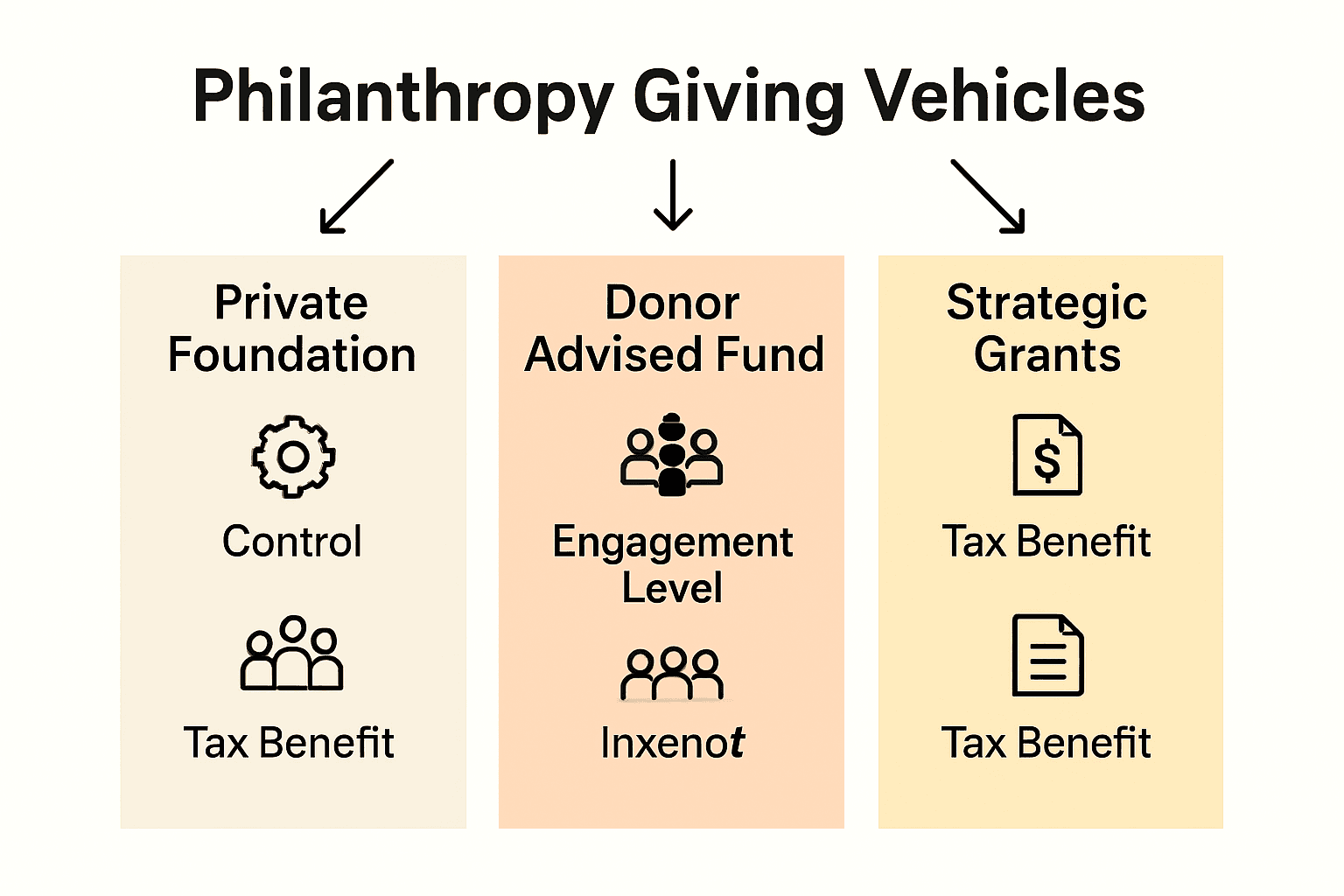 Some families might prefer a more hands on approach through a private foundation while others might find donor advised funds offer greater flexibility and lower administrative burdens.
Pro Tip: Consult with a philanthropic advisor who can help you navigate the complex landscape of giving vehicles and identify the most strategic options for your specific goals.
Once you have selected your preferred impact strategies and giving vehicles you will be ready to develop a detailed implementation plan that transforms your philanthropic vision into actionable initiatives.
Step 4: Establish governance and decision structures
Establishing clear governance and decision making structures is fundamental to creating a sustainable and effective family philanthropy strategy. This critical step transforms your collective vision into a practical framework for collaborative giving that can adapt and grow over time.
According to the Stanford PACS Center, successful family philanthropy requires thoughtful involvement of family members with clearly defined roles and expectations. Begin by creating a formal document that outlines how decisions will be made who has voting rights and the specific responsibilities of each family member or stakeholder. This might include establishing regular family meetings creating committees with specific focus areas and defining processes for proposing reviewing and approving philanthropic initiatives.
The National Center for Family Philanthropy emphasizes the importance of building collaborative systems that balance individual perspectives with collective goals. Consider developing a governance model that allows for meaningful participation across generations while maintaining clear leadership and accountability. This could involve creating a family philanthropic council with rotating leadership rotating committee assignments or implementing structured decision making processes that ensure every family member has a voice.
Pro Tip: Draft a family philanthropy charter that articulates your shared values governance principles and decision making protocols to provide clarity and prevent future misunderstandings.
Once you have established robust governance structures you will be prepared to move forward with implementing your philanthropic strategy with confidence and alignment.
Step 5: Track outcomes and refine your philanthropy plan
Tracking outcomes and continuously refining your philanthropy plan is essential for creating meaningful and sustainable social impact. This final step transforms your philanthropic efforts from a static strategy to a dynamic learning process that evolves with your insights and experiences.
According to the National Center for Family Philanthropy, effective philanthropy requires continuous reflection and adaptability. Develop a robust monitoring and evaluation framework that goes beyond simple financial metrics. Create comprehensive tracking systems that measure both quantitative outcomes like number of people served and qualitative impacts such as transformative changes in communities. Regularly schedule family meetings to review these metrics discuss their implications and openly assess the effectiveness of your philanthropic investments.
The Stanford PACS Philanthropy Toolkit emphasizes the importance of learning and adaptation in philanthropic strategies. Implement a systematic approach to gathering feedback from grantees community stakeholders and independent evaluators. This multi perspective review will help you understand the true depth of your impact and identify areas for strategic refinement. Be prepared to make courageous adjustments to your approach pivot when necessary and celebrate both your successes and the lessons learned from initiatives that did not fully meet their intended goals.
Pro Tip: Create an annual philanthropy impact report that transparently documents your investments outcomes lessons learned and future strategic adjustments.
With a commitment to continuous learning and improvement you will transform your philanthropy from a well intentioned effort to a powerful catalyst for meaningful social change.
Unlock Your Family’s Philanthropic Potential with Expert Support
Building an impactful family philanthropy plan requires clarity, collaboration, and the right tools to align your family’s vision with effective giving strategies. This article highlights key challenges such as defining a shared philanthropic purpose, establishing governance, and selecting giving vehicles that truly reflect your values. Many families feel overwhelmed when trying to translate passion into structured action while ensuring sustainable outcomes.
Future Family Office understands these complexities and offers a dedicated platform designed for families and ultra-high-net-worth investors to connect with trusted service providers, industry experts, and peer networks. With access to a comprehensive directory and real-time industry insights, you can confidently build your governance frameworks, assess your giving capacity, and track impact metrics.
Elevate your family’s philanthropy from well-meaning intentions to purposeful, measurable impact today.

Explore tailored resources and expand your network by visiting Future Family Office. Discover how our community and tools empower families to succeed in strategic philanthropy. Take the next step now to transform your philanthropic vision into lasting social change through expert connections and valuable industry news. Begin your journey with confidence and clarity.
Frequently Asked Questions
How do I define my family’s philanthropic vision?
Start by gathering your family members for an open discussion about what values and social challenges resonate with you. Encourage everyone to share their thoughts and aim to create a clear mission statement that captures your collective vision.
What are the key steps to assess my family’s giving capacity?
Conduct a comprehensive financial assessment, considering both liquid assets and ongoing charitable commitments. Catalog potential annual contributions and any non-financial resources like skills or volunteer time to align with your philanthropic goals.
How do I select the best impact strategies and giving vehicles?
Evaluate different giving vehicles like private foundations, donor advised funds, or direct contributions based on your family’s objectives and values. Assess each option for control, tax implications, and engagement opportunities to ensure they fit your philanthropic purpose.
What governance structures should I establish for family philanthropy?
Draft a formal document outlining decision-making processes and roles for each family member involved in philanthropy. Consider forming a family council with rotating leadership to ensure everyone has a voice and to promote collaboration across generations.
How can I track and evaluate the outcomes of my philanthropic efforts?
Develop a monitoring and evaluation framework that measures both quantitative outcomes and qualitative impacts of your philanthropy. Schedule regular family meetings to discuss these metrics, reflect on effectiveness, and make strategic adjustments as needed.
What steps can I take to refine my philanthropy plan over time?
Implement a systematic approach to gather feedback from grantees and stakeholders to evaluate your impact. Use this feedback to identify areas for improvement and adjust your strategies, making it a continuous learning process that evolves with your experiences.
Recommended
- Why Do Families Give? The 5 Spheres And Motivations Around Philanthropy – Future Family Office
- The Future Of Philanthropy in Family Offices – Future Family Office
- How can we Prepare the Now Generation of Family Business? – Future Family Office
- How can we Prepare the Now Generation of Family Business? – Future Family Office