


Most American families believe legacy planning is only for the ultra wealthy, yet over 60 percent admit they have no plan in place. This gap leaves generational wealth, core values, and family harmony at risk. Tackling common myths and understanding the real scope of legacy planning empowers you to protect more than just money—preserving stories, lessons, and a lasting impact for those who matter most.
Table of Contents
- Defining Legacy Planning And Common Myths
- Core Elements Of Effective Legacy Strategies
- Legal Structures And Global Considerations
- Tax Implications And Cross-Border Complexities
- Identifying Risks And Avoiding Costly Mistakes
Key Takeaways
| Point | Details |
|---|---|
| Legacy Planning is Holistic | It encompasses preserving family wealth, values, and traditions across generations, beyond just financial assets. |
| Common Misconceptions are Misleading | Legacy planning is not only for wealthy elderly individuals; it includes family values, experiences, and wisdom shared across generations. |
| Legal and Tax Considerations are Essential | Effective legacy planning requires understanding complex legal frameworks and tax implications to ensure smooth transitions of wealth. |
| Risk Management is Crucial | Proactive identification of communication gaps and governance challenges can prevent family disputes and ensure preparedness for future generations. |
Defining Legacy Planning and Common Myths
Legacy planning represents a strategic and holistic approach to preserving family wealth, values, and traditions across generations. Unlike simplistic financial inheritance, this comprehensive process involves thoughtful preparation that transcends monetary assets. Family offices and wealth managers recognize legacy planning as a nuanced framework for transferring not just financial resources, but also intellectual and ethical capital.
Contrary to popular misconceptions, legacy planning is not exclusively for elderly wealthy individuals. Legacy planning involves more than financial assets – it encompasses family values, personal philosophies, life experiences, and generational wisdom. Ultra high net worth families understand that true inheritance includes emotional intelligence, entrepreneurial spirit, and shared cultural narratives that cannot be quantified by bank statements.
Common myths about legacy planning often prevent families from taking proactive steps. Some believe the process is overly complex or requires immediate comprehensive documentation. In reality, legacy planning is flexible and evolves with family dynamics. Key misconceptions include:
- Thinking legacy planning is only about financial distribution
- Believing it’s exclusively for older generations
- Assuming it requires substantial immediate financial investment
- Viewing it as a morbid or uncomfortable conversation
Successful legacy planning requires open communication, strategic thinking, and a forward-looking perspective that bridges generational perspectives. Families who approach this process collaboratively create sustainable frameworks that protect not just wealth, but shared values and collective vision.
Core Elements of Effective Legacy Strategies
Legacy strategies represent sophisticated approaches that transcend traditional wealth management, focusing on creating comprehensive frameworks for generational prosperity. Family offices increasingly recognize that effective legacy planning requires a multidimensional approach that integrates financial, intellectual, and emotional assets.
Successful legacy strategies demand developing a long-term orientation with precise institutional capabilities that function independently of individual family members. This approach ensures sustainability and resilience, allowing wealth and values to persist across generations through strategic design and intentional governance structures.
Key elements of robust legacy strategies include:
- Articulating a clear vision and mission
- Establishing comprehensive governance frameworks
- Creating mechanisms for continuous knowledge transfer
- Developing adaptive financial and intellectual capital
- Implementing ethical decision-making protocols
- Building scalable systems that transcend individual contributions
Ultra high net worth families understand that true legacy planning goes beyond monetary inheritance. It requires cultivating intellectual capital, preserving family values, and creating institutional memory that allows future generations to understand their heritage, make informed decisions, and continue their family’s fundamental principles and achievements. Strategic legacy planning is ultimately about empowering descendants with resources, wisdom, and a meaningful framework for continued success.

Legal Structures and Global Considerations
Legacy planning requires sophisticated legal structures that transcend traditional inheritance models, addressing complex global considerations for ultra high net worth families. These frameworks must navigate intricate international regulations, tax landscapes, and cross-border asset protection strategies that safeguard family wealth across multiple jurisdictions.
Legacy planning involves critical legal estate planning actions to ensure continued stewardship of assets through carefully designed legal mechanisms. Family offices must develop comprehensive strategies that integrate multiple legal structures, including trusts, foundations, holding companies, and specialized investment vehicles that provide flexibility and protection across different global regulatory environments.
Key legal considerations for global legacy planning include:
- Establishing multinational trust structures
- Understanding cross-border taxation implications
- Creating robust asset protection mechanisms
- Designing flexible inheritance frameworks
- Implementing comprehensive governance protocols
- Navigating international legal and regulatory complexities
Ultra high net worth families recognize that effective legal structures must balance technical compliance with strategic vision. This requires deep collaboration with international legal experts, tax advisors, and wealth management professionals who understand the nuanced landscape of global wealth preservation. The ultimate goal is creating adaptable legal frameworks that protect family assets, minimize tax liabilities, and provide sustainable mechanisms for intergenerational wealth transfer while maintaining the family’s core values and strategic objectives.
Tax Implications and Cross-Border Complexities
Tax strategy represents a critical component of sophisticated legacy planning, requiring ultra high net worth families to navigate complex international fiscal landscapes with precision and strategic forethought. Global wealth preservation demands nuanced understanding of cross-border taxation frameworks that can dramatically impact intergenerational asset transfer and overall financial preservation.
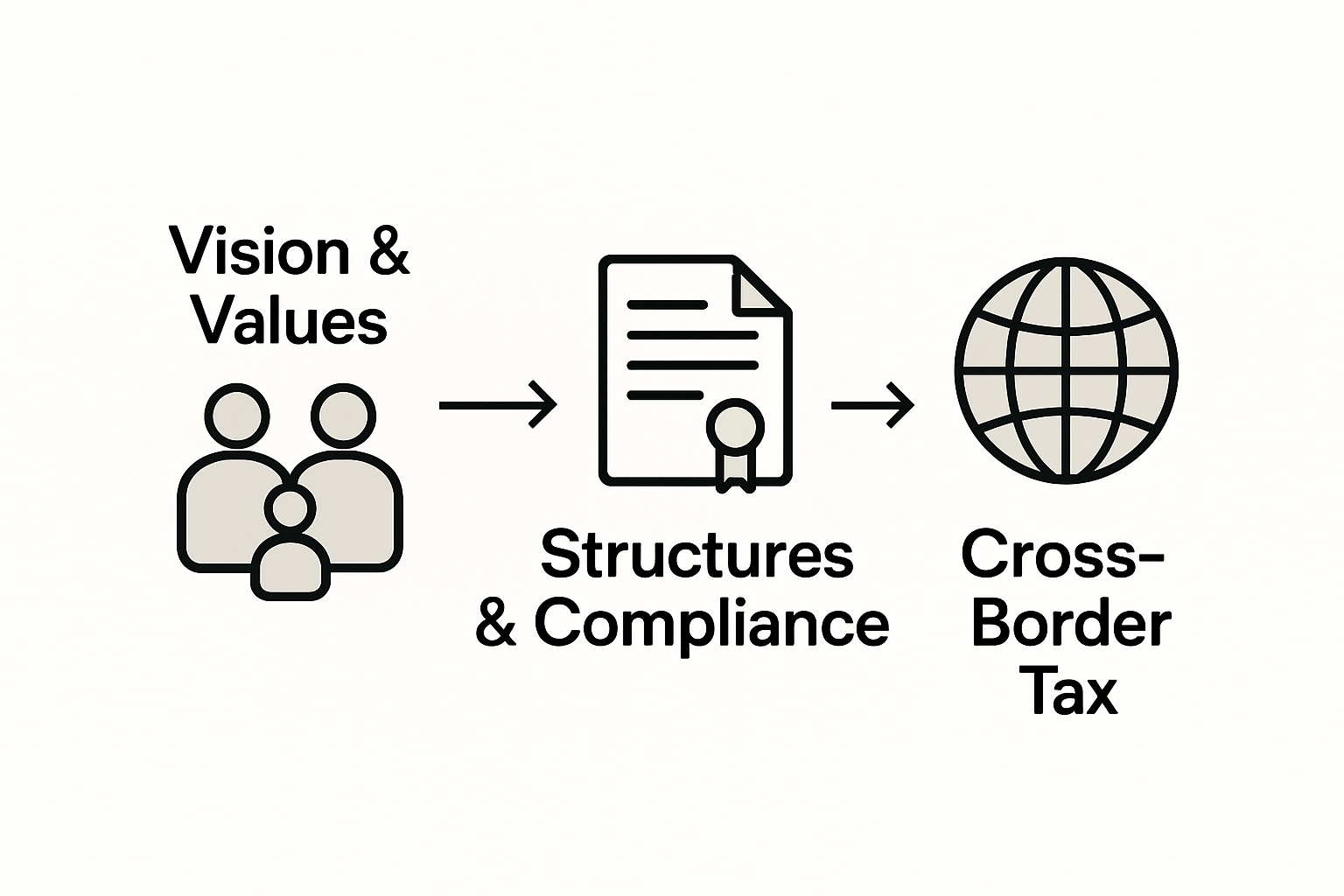
Inadequate legacy planning can lead to unintended tax implications, potentially reducing estate value and leaving heirs with substantial tax burdens. Family offices must develop comprehensive tax mitigation strategies that anticipate potential regulatory shifts, leverage international tax treaties, and create flexible structures that optimize fiscal efficiency across multiple jurisdictions.
Key considerations for managing cross-border tax complexities include:
- Analyzing international tax treaty networks
- Implementing strategic asset location strategies
- Understanding varying inheritance tax regulations
- Developing multi-jurisdictional compliance protocols
- Creating tax-efficient wealth transfer mechanisms
- Monitoring evolving global tax legislation
Successful tax planning requires sophisticated collaboration between family offices, international tax experts, legal advisors, and financial strategists. The objective transcends mere tax minimization – it involves creating holistic frameworks that preserve family wealth, maintain operational flexibility, and ensure compliance with increasingly complex global regulatory environments while protecting the family’s long-term financial interests.
Identifying Risks and Avoiding Costly Mistakes
Risk management sits at the core of successful legacy planning, requiring ultra high net worth families to anticipate potential challenges and develop proactive mitigation strategies. Comprehensive risk assessment goes beyond financial considerations, encompassing family dynamics, governance structures, communication protocols, and long-term strategic alignment.
Procrastination and denial represent significant risks that can lead to unpreparedness and potential family disputes. Family offices must cultivate a culture of early engagement, transparent communication, and systematic planning that normalizes discussions about wealth transfer, generational expectations, and potential inheritance complexities.
Key risks to anticipate and mitigate include:
- Inadequate communication about wealth transfer expectations
- Lack of clear governance and decision-making frameworks
- Potential family conflicts over asset distribution
- Insufficient preparation of next-generation leadership
- Overlooking emotional and psychological aspects of inheritance
- Failure to adapt legacy strategies to changing family dynamics
Effective risk management requires a holistic approach that balances technical precision with emotional intelligence. Successful families create robust systems that transcend individual personalities, establish clear protocols for conflict resolution, and develop adaptive frameworks that can evolve with changing family needs, market conditions, and global economic landscapes. The ultimate goal is building resilient legacy structures that protect both financial assets and family relationships across generations.
Build a Lasting Legacy with Informed Connections and Expertise
Legacy planning demands more than managing assets. It requires a clear vision, effective governance, and navigating complex legal and tax landscapes to safeguard your family’s values and wealth across generations. Challenges like global tax implications, cross-border legal structures, and risk management can feel overwhelming without the right resources and professional network.
Future Family Office offers a unique platform designed for ultra-high-net-worth families and their advisors to engage with trusted experts, discover service providers, and access invaluable knowledge focused on family office investments and legacy preservation. Our comprehensive directory and networking hub provides the tools needed to connect with professionals who understand the nuances of legacy strategies and global wealth protection.

Don’t leave your family’s future to chance. Explore how strategic collaboration and tailored solutions can help you build a legacy that endures. Visit Future Family Office now to join a community committed to empowering lasting wealth and values. Start securing your family’s legacy today.
Frequently Asked Questions
What is legacy planning?
Legacy planning is a comprehensive approach to preserving family wealth, values, and traditions across generations. It involves strategic preparation that goes beyond financial inheritance, including intellectual and ethical capital.
Who should consider legacy planning?
Legacy planning is not just for wealthy or elderly individuals. It is beneficial for families of all wealth levels who want to ensure the sustainable transfer of values, wisdom, and resources to future generations.
What are the key elements of effective legacy strategies?
Key elements include articulating a clear vision and mission, establishing governance frameworks, creating mechanisms for knowledge transfer, developing adaptive financial capital, and implementing ethical decision-making protocols.
How do legal structures impact legacy planning?
Legal structures play a crucial role in legacy planning as they help navigate complex regulations, protect assets, and ensure efficient wealth transfer across generations. They include trusts, foundations, and holding companies that facilitate tax efficiency and compliance.
Recommended
- Understanding the Role of Estate Planning for Wealth Management – Future Family Office
- The Essential Guide to Wealth Transfer Planning – Future Family Office
- What Is Generational Wealth Planning? Complete Overview – Future Family Office
- 7 Key Wealth Preservation Techniques for Family Offices – Future Family Office
- Wealth Transfer Strategies: Secure Your Financial Legacy – Finblog