

Over 60 percent of ultra-high-net-worth investment deals are initiated through direct relationship building, a fact that resonates with every American family office executive striving to stay ahead in a crowded global market. Choosing the right lead generation strategy often determines whether your network grows or stagnates. This guide offers clear, actionable methods for identifying key family office segments, refining outreach, and connecting with top-tier prospects worldwide.
Table of Contents
- Step 1: Identify Target Family Office Segments
- Step 2: Build Tailored Outreach Assets And Profiles
- Step 3: Leverage Directories And Industry Networks
- Step 4: Engage Prospects Through Personalized Communication
- Step 5: Verify And Refine Qualified Leads
Quick Summary
| Key Insight | Explanation |
|---|---|
| 1. Identify Family Office Segments | Segment family offices by asset size, location, and investment focus to tailor your outreach. |
| 2. Create Tailored Outreach Assets | Develop personalized communication materials for each segment to enhance engagement and effectiveness. |
| 3. Utilize Directories and Networks | Leverage industry directories and professional networks to connect with potential family office partners. |
| 4. Engage with Personalized Communication | Craft individualized messages based on each family office’s unique interests to build meaningful relationships. |
| 5. Verify and Refine Leads | Systematically assess potential leads using a dynamic scoring system to ensure quality and relevancy. |
Step 1: Identify target family office segments
Identifying the right family office segments is crucial for effective lead generation. Your goal in this step is to develop a strategic approach for segmenting potential family offices based on specific characteristics and investment profiles.
Begin by analyzing the global landscape of family offices using comprehensive research data. KPMG’s 2023 Global Family Office Benchmark Report indicates approximately 20,000 family offices worldwide, which provides an expansive yet structured environment for targeting. Segment these family offices across multiple dimensions including asset size, geographical location, industry focus, investment maturity, and operational sophistication.
Key segmentation criteria should include total assets under management, investment preferences, risk tolerance, and governance structures. Look for nuanced differences such as whether they are single family offices or multi-family offices, their investment horizons, preferred sectors like technology, real estate, or private equity, and their level of internal professional management. Geographic segmentation is also critical since family offices in North America might have different investment strategies compared to those in Europe or Asia Pacific.
Once you have mapped out these segments, prioritize them based on your specific value proposition and alignment with their investment goals. Create detailed personas for each segment that include their typical characteristics, pain points, and potential investment interests.
Here’s a summary of typical family office segments and their core investment characteristics:
| Segment Type | Main Investment Focus | Typical Asset Size | Management Structure |
|---|---|---|---|
| Single Family Office | Direct investments, legacy | $100M to $1B+ | Internal staff |
| Multi-Family Office | Diversified portfolios | $50M to $500M | External advisors |
| Boutique Office | Niche sectors, innovation | Under $50M | Lean management |
| Institutional Office | Real estate, private equity | $1B+ | Corporate-level team |
Pro tip: Leverage professional networking platforms and industry databases to gather granular insights about different family office segments before initiating your targeted outreach strategy.
Step 2: Build tailored outreach assets and profiles
Building tailored outreach assets and profiles is a critical step in effectively connecting with family offices. Your objective is to create compelling, personalized communication materials that resonate with the specific segments you have previously identified.
Start by developing comprehensive profiles that go beyond basic demographic information. Strategic prospecting requires understanding how to find the right prospective clients through detailed research and targeted insights. Each profile should include key investment preferences, historical investment patterns, sector focus, risk appetite, and unique value propositions that might attract their interest.

Construct customized outreach assets that demonstrate deep understanding of each family office segment. This means creating pitch decks, investment summaries, and communication strategies that speak directly to their specific investment goals and pain points. Utilize a mix of mediums such as detailed investment memorandums, executive summaries, multimedia presentations, and targeted email communications that highlight your unique value proposition.
Ensure your outreach assets are not generic but laser focused on the specific needs and interests of each family office segment. Consider developing sector specific materials that showcase your expertise, track record, and potential alignment with their investment strategy. Visual elements like infographics, performance charts, and comparative analyses can significantly enhance the impact of your communication.
The table below compares key types of outreach assets for family office engagement:
| Asset Type | Best Use Case | Business Impact |
|---|---|---|
| Investment Memorandum | Deep sector analysis | Builds trust with sophisticated investors |
| Pitch Deck | Quick overviews, first meetings | Captures interest, simplifies messaging |
| Executive Summary | High-level snapshots | Engages busy decision makers |
| Multimedia Presentation | Interactive engagement | Conveys track record with visual context |
Pro tip: Develop a dynamic asset library that allows quick customization of materials for different family office segments, enabling rapid and personalized response capabilities.
Step 3: Leverage directories and industry networks
Leveraging directories and industry networks is a strategic approach to expanding your family office lead generation efforts. Your primary objective is to systematically connect with potential investment partners through established professional platforms and specialized databases.
Comprehensive global family office reports emphasize the critical importance of utilizing established industry networks for identifying and accessing prospective family offices. Begin by subscribing to premium industry directories that provide verified contact information and detailed profiles of family offices across different geographical regions and investment specialties. These directories often include sophisticated search filters that allow you to segment potential contacts based on asset size, investment preferences, and sector focus.
Expand your network through strategic participation in industry events, conferences, and professional associations. Focus on building genuine relationships rather than purely transactional interactions. Attend specialized family office conferences, join exclusive networking platforms, and engage with professional groups that cater specifically to wealth management and private investment professionals. These platforms offer opportunities to gain insider insights, understand market trends, and establish credible connections with decision makers.
Develop a systematic approach to managing and nurturing your network. Create a comprehensive database of contacts that includes detailed notes about each family office interaction, potential investment interests, and previous communication history. Regularly update this database and implement a consistent follow up strategy that demonstrates your understanding of their unique investment objectives.
Pro tip: Create a personalized outreach strategy for each directory and network contact, tailoring your communication to reflect their specific investment profile and demonstrated interests.
Step 4: Engage prospects through personalized communication
Engaging prospects through personalized communication is a nuanced art that requires strategic precision and genuine connection. Your goal is to transform initial contacts into meaningful potential investment relationships by crafting communication that speaks directly to each family office’s unique interests and objectives.
Begin by segmenting your communication approach based on the detailed profiles you have previously developed. Strategic networking demands understanding the specific communication preferences of family office decision makers to create truly resonant outreach. Develop communication templates that can be quickly customized with specific details relevant to each prospect such as their investment history, sector preferences, and demonstrated strategic priorities.
Prioritize quality over quantity in your communication strategy. Instead of sending generic mass communications, focus on crafting highly targeted messages that demonstrate deep understanding of the specific family office’s investment philosophy. Incorporate specific insights about their past investments, market positioning, and potential areas of strategic alignment. Use a mix of communication channels including personalized emails, carefully curated investment summaries, targeted research reports, and strategic introductory materials that highlight your unique value proposition.
Establish a systematic follow up process that maintains consistent yet non intrusive communication. Create a structured communication cadence that allows you to stay on the prospect’s radar without becoming overwhelming. Track all interactions meticulously, noting specific conversation points, expressed interests, and potential collaboration opportunities. Your communication should progressively build trust by demonstrating market expertise, understanding their specific investment ecosystem, and showing genuine commitment to potential partnership.
Pro tip: Implement a dynamic communication tracking system that allows you to personalize follow up communications based on previous interaction context and demonstrated prospect interests.
Step 5: Verify and refine qualified leads
Verifying and refining qualified leads is a critical process that separates successful lead generation strategies from ineffective outreach efforts. Your objective is to systematically validate and enhance the quality of potential family office investment opportunities through rigorous assessment and continuous refinement.
Systematic research methodologies recommend triangulating data from multiple authoritative sources to ensure lead accuracy and comprehensive qualification across family office prospects. Develop a multifaceted verification framework that combines internal intelligence gathering, public record analysis, third party validation sources, and direct communication channels. This approach allows you to cross reference information and validate the credibility of potential leads beyond surface level demographic data.
Implement a dynamic scoring mechanism that evaluates leads across multiple dimensions including investment capacity, strategic alignment, historical performance, decision maker accessibility, and potential collaboration potential. Create a structured assessment protocol that assigns weighted scores to different qualification criteria enabling you to prioritize and rank leads systematically. Continuously update your lead qualification model by incorporating feedback from previous interactions, market intelligence, and evolving investment trends.
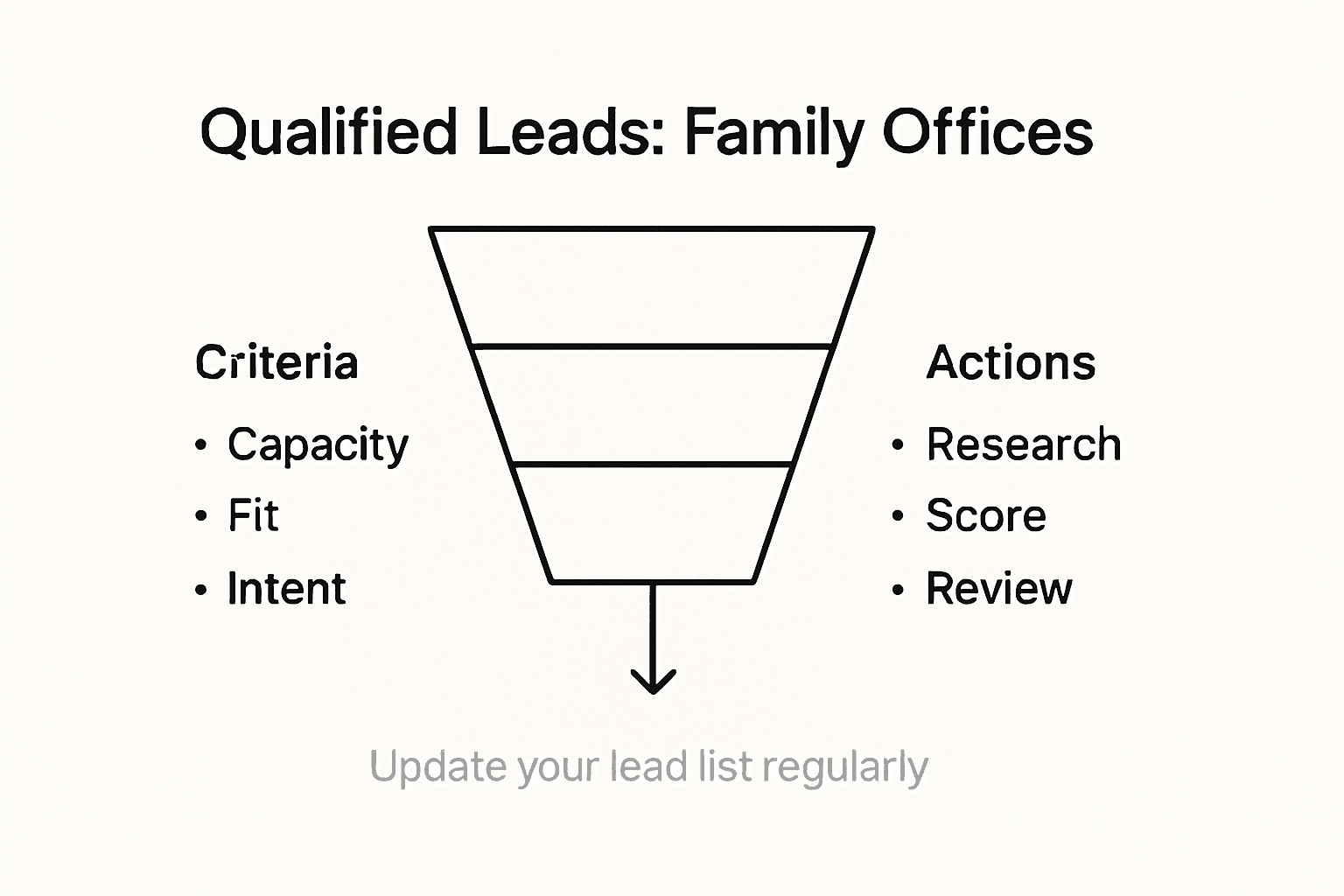
Establish a regular review and refinement process for your lead database. Schedule periodic comprehensive audits that reassess the current status of each potential family office contact. Remove outdated or unresponsive leads while expanding and deepening information about promising prospects. Pay special attention to changes in leadership, investment strategy shifts, and emerging market opportunities that might impact the potential for future collaboration.
Pro tip: Create an adaptive lead scoring algorithm that automatically adjusts qualification criteria based on recent interaction data and demonstrated engagement levels.
Unlock Tailored Family Office Connections for Effective Lead Generation
Navigating the complex stages of family office lead generation calls for precision in identifying targeted segments, crafting personalized communications, and refining qualified leads. This article highlights key challenges such as segmenting by investment preferences and building tailored outreach assets that truly resonate. Overcoming these pain points requires access to transparent and detailed information about family offices worldwide.
Future Family Office addresses these exact needs by providing a specialized platform where you can explore a comprehensive family office directory, connect directly with verified decision makers, and leverage industry news and insights to sharpen your outreach strategy. Whether you are seeking to build detailed prospect profiles or engage prospects with personalized communication, our resources empower you to act with confidence and clarity.
Experience seamless lead generation support by visiting Future Family Office and start transforming cold leads into trusted partners. For immediate access to curated family office data and expert market trends visit our platform.
Take action now to elevate your family office lead generation approach and gain a competitive edge. Explore how Future Family Office can become your central hub for collaboration and growth.
Frequently Asked Questions
What are the key characteristics to consider when segmenting family offices?
Identifying key characteristics such as asset size, investment preferences, risk tolerance, and governance structures is crucial. Segment family offices into categories like single-family offices and multi-family offices to tailor your approach effectively.
How can I create tailored outreach materials for different family office segments?
Develop comprehensive profiles that include investment preferences and historical patterns. Customize outreach assets such as pitch decks and investment summaries to address the specific needs and interests of each family office segment.
What types of industry networks should I leverage for family office lead generation?
Engage with specialized family office conferences and professional associations that focus on wealth management. Building genuine relationships through networking will help expand your reach and uncover potential investment partnerships.
How do I track and manage my outreach to family office prospects?
Implement a dynamic communication tracking system to catalog all interactions with prospects. Maintain detailed notes on previous conversations and preferences to personalize follow-ups and nurture relationships effectively.
What is the importance of verifying qualified leads in family office outreach?
Verifying qualified leads ensures you focus on credible and relevant prospects. Develop a scoring mechanism to prioritize leads based on investment capacity and strategic alignment, updating your database regularly to maintain accuracy.
Recommended
- 5 Ways to Find the Right Prospective Clients – Future Family Office
- 3 Tips To Effectively Connect And Raise Investment From Family Offices. – Future Family Office
- What Is a Family Office? And Who Might Need One? – Future Family Office
- Beyond the Pitch Deck: What Family Offices Really Want to See – Future Family Office