

More than 80 percent of American family office executives say defining clear investment objectives is vital for lasting success. Today, global market volatility and shifting regulatory climates mean making the right investment decisions is more complex than ever. This guide provides actionable steps for C-suite leaders to develop stronger screening frameworks, validate high-potential deals, and ensure smarter portfolio diversification across international markets.
Table of Contents
- Step 1: Define Investment Objectives And Filter Criteria
- Step 2: Gather Detailed Information On Potential Deals
- Step 3: Analyze Financials And Risk Factors Thoroughly
- Step 4: Assess Strategic Fit And Value Creation
- Step 5: Validate Results With Expert Feedback And Benchmarking
Quick Summary
| Key Insight | Explanation |
|---|---|
| 1. Define clear investment goals | Establish specific investment objectives aligned with your family’s financial vision for effective wealth management. |
| 2. Develop robust filter criteria | Create flexible screening parameters to evaluate investment opportunities systematically, adapting to changing market conditions. |
| 3. Conduct thorough research | Utilize diverse resources and structured processes to gather detailed insights about potential investments, enhancing decision-making. |
| 4. Analyze financials and risks | Employ a multidimensional approach to evaluate financial performance and potential risks, protecting family wealth effectively. |
| 5. Validate investments with experts | Seek external feedback and benchmarking to refine investment strategies and ensure alignment with best practices and market standards. |
Step 1: Define investment objectives and filter criteria
Defining clear investment objectives and filter criteria is fundamental to effective wealth management for family offices. A comprehensive study of private equity investment strategies reveals that successful family offices develop nuanced, personalized investment frameworks that go far beyond traditional financial screening.
Your investment objectives should articulate specific goals that align with your family’s unique financial vision. This means moving beyond simple return metrics and considering deeper priorities like wealth preservation, generational wealth transfer, philanthropic impact, and values-based investing. The PwC Global Family Office Deals Study highlights that modern family offices are increasingly integrating qualitative considerations into their investment decision processes.
To develop robust filter criteria, start by mapping out your core investment parameters. This typically includes defining acceptable risk tolerance levels, preferred asset classes, geographic investment regions, minimum and maximum deal sizes, sector preferences, and liquidity requirements. Consider creating a weighted scoring system that assigns numerical values to different investment attributes, allowing you to systematically evaluate potential opportunities against your predefined standards. Remember that your filter criteria should remain flexible enough to adapt to changing market conditions while maintaining alignment with your fundamental strategic objectives.
Pro tip: Conduct periodic reviews of your investment objectives and filter criteria at least annually to ensure they remain relevant and responsive to shifting economic landscapes and your family’s evolving financial goals.
Here’s a summary of key investment screening criteria and their business impact:
| Screening Criterion | Practical Example | Potential Business Impact |
|---|---|---|
| Risk Tolerance | High vs. Low risk assets | Defines portfolio volatility and safety |
| Asset Class Preference | Private equity, real estate | Impacts diversification and returns |
| Geographic Focus | Domestic, global, regional | Influences exposure to local markets |
| Liquidity Requirement | Short-term, long-term deals | Affects cash flow and flexibility |
| Sector Focus | Tech, healthcare, energy | Shapes sector expertise and growth |
Step 2: Gather detailed information on potential deals
The Wharton Family Office Survey reveals that systematic information gathering is the cornerstone of sophisticated investment screening. In this step, you will transform your investment search from a passive process into an active intelligence collection mission, designed to uncover comprehensive insights about potential deals.

Begin by developing a multi-channel research strategy that leverages both internal capabilities and external resources. This means assembling a robust information gathering toolkit that includes proprietary databases, professional networks, industry reports, financial analytics platforms, and strategic advisory connections. The 2025 PwC Global Family Office Deals Study highlights the importance of creating a structured approach to collecting commercial intelligence, which goes well beyond traditional financial metrics.
Your information gathering process should focus on collecting data across several critical dimensions: financial performance, market positioning, competitive landscape, management team quality, technological innovation potential, regulatory environment, and long term growth trajectories. Develop a standardized due diligence framework that allows you to systematically evaluate and score potential investments. This might include creating detailed questionnaires, scheduling expert interviews, requesting comprehensive financial documentation, and conducting independent research to validate key claims and assumptions presented by potential investment targets.
Pro tip: Create a centralized digital repository for all gathered investment intelligence, enabling efficient information tracking, collaborative review, and seamless knowledge sharing across your family office investment team.
Step 3: Analyze financials and risk factors thoroughly
A comprehensive literature review on family office investment strategies underscores the critical importance of rigorous financial analysis and comprehensive risk assessment. In this pivotal step, you will dive deep into the financial underpinnings of potential investments, transforming raw data into actionable strategic insights that protect and grow your family’s wealth.
Modern risk analytics in family offices have evolved far beyond traditional spreadsheet calculations. Your analysis should encompass a multi dimensional approach that integrates quantitative metrics with qualitative evaluation. This means constructing a robust analytical framework that examines financial statements, cash flow projections, historical performance trends, debt structures, and potential future scenarios. Pay particular attention to key performance indicators like EBITDA, return on invested capital, debt to equity ratios, and normalized earnings potential.
Develop a sophisticated risk scoring system that evaluates potential investments across multiple dimensions including market risk, credit risk, operational risk, regulatory risk, and strategic alignment with your family office’s long term objectives. Implement scenario based stress testing that models potential market disruptions, economic downturns, and industry specific challenges. This approach allows you to understand not just the potential returns, but the comprehensive risk profile and potential volatility of each investment opportunity.
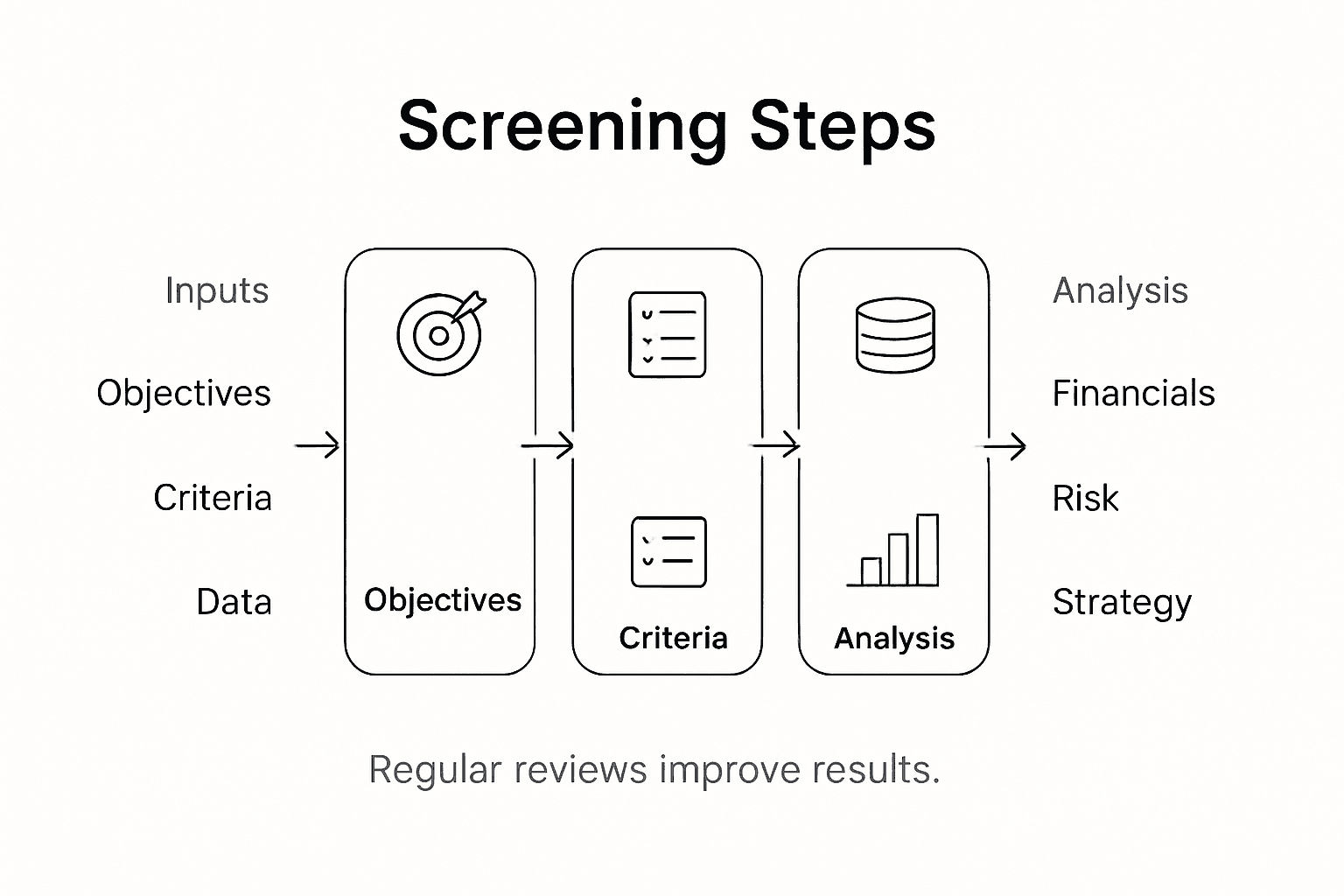
Pro tip: Establish a systematic risk review process that includes quarterly reassessments of your investment portfolio, enabling dynamic risk management and proactive adjustment of your investment strategy.
Step 4: Assess strategic fit and value creation
A sophisticated model of investment fit framework reveals that successful family offices go beyond simple financial calculations when evaluating potential investments. In this critical step, you will conduct a comprehensive assessment that examines how a potential investment aligns with your family’s broader strategic vision, existing capabilities, and long term objectives.
The PwC Global Family Office Deals Study emphasizes the importance of holistic value creation assessment. Your strategic fit analysis should evaluate multiple dimensions beyond pure financial metrics. This means examining potential investments through a multifaceted lens that considers innovation potential, operational synergies, reputational impact, governance compatibility, and alignment with your family’s core values and mission. Look for investments that offer not just monetary returns, but opportunities for knowledge transfer, strategic positioning, and potential future growth.
Develop a structured evaluation framework that scores potential investments across key strategic dimensions. This might include assessing technological compatibility, management team alignment, potential for knowledge sharing, complementarity with existing portfolio investments, and long term transformative potential. Consider creating a weighted scoring system that allows you to objectively compare opportunities while maintaining flexibility for nuanced, qualitative considerations that traditional quantitative models might overlook.
Pro tip: Create a dynamic strategic fit scorecard that can be regularly updated, allowing your family office to maintain a living, adaptable framework for evaluating investment opportunities.
Step 5: Validate results with expert feedback and benchmarking
Performance measurement and benchmarking frameworks represent the critical final validation stage of your investment screening process. In this step, you will transform your preliminary analysis into a robust, externally validated investment strategy by seeking sophisticated expert perspectives and comparing your findings against industry standards.
Construct a comprehensive validation approach that incorporates multiple layers of expert feedback. This means actively engaging industry specialists, sector experts, independent advisors, and peer networks who can provide nuanced insights beyond your internal assessment. Develop a structured consultation process that includes targeted interviews, expert panel reviews, and detailed discussions that challenge your initial assumptions and uncover potential blind spots in your investment evaluation.
Implement a rigorous benchmarking methodology that compares your investment opportunity against similar transactions within your peer group and broader market segments. Create a systematic scoring mechanism that evaluates your potential investment across multiple dimensions including performance metrics, risk adjusted returns, competitive positioning, and alignment with emerging industry trends. Remember that effective benchmarking is not about absolute comparisons, but understanding relative strengths, potential opportunities, and strategic differentiation.
The following comparison illustrates expert validation versus benchmarking for final investment decisions:
| Validation Method | Purpose | Strengths | Limitations |
|---|---|---|---|
| Expert Feedback | Gain external insights and test biases | Offers industry-specific context | May be subjective or inconsistent |
| Benchmarking | Compare against peer investments | Provides objective performance yardstick | May miss unique deal nuances |
Pro tip: Cultivate a diverse network of expert advisors with complementary backgrounds to ensure a multifaceted perspective when validating investment opportunities.
Streamline Your Investment Screening with Future Family Office
Screening investment opportunities for family offices demands precision in defining objectives, gathering intelligence, and assessing risk and strategic fit. If navigating complex financial analyses and expert validations feels overwhelming, you are not alone. This article highlights how critical it is to establish clear filter criteria and conduct thorough due diligence to protect and grow your family’s wealth.
At Future Family Office, we understand these challenges deeply. Our platform connects you to a global community of family offices, industry experts, and trusted service providers who share insights and best practices tailored to ultra-high-net-worth investors. With tools designed to support comprehensive deal sourcing, benchmarking, and knowledge sharing, you gain the transparency and support needed to maintain a dynamic investment screening process aligned with your unique goals.

Take control of your family office’s investment strategy today by joining our network. Explore expert articles, discover specialized service providers, and engage with a vetted community that empowers informed decisions. Visit Future Family Office now and unlock the resources that make complex investment screening clearer, more accessible, and efficient.
Frequently Asked Questions
What are the key steps in screening investment opportunities for family offices?
Begin by defining your investment objectives and filter criteria, focusing on factors like risk tolerance and asset class preference. Next, gather detailed information on potential deals, analyze financials and risks, assess strategic fit, and validate your findings through expert feedback and benchmarking.
How can I effectively gather information on potential investment deals?
Develop a multi-channel research strategy that utilizes internal resources and external networks to compile comprehensive insights. Create a structured due diligence framework that includes questionnaires and expert interviews to ensure thorough data collection, allowing you to analyze potential investments systematically.
What should I focus on when analyzing financials and risk factors?
Examine key performance indicators and construct a multi-dimensional risk scoring system to evaluate potential investments. Implement scenario-based stress testing to assess how market disruptions could impact your investment’s cash flow and overall risk profile.
How can I assess the strategic fit of an investment opportunity?
Evaluate how the investment aligns with your family office’s broader vision, operational capabilities, and long-term goals. Develop a scoring framework that considers potential synergies and transformative opportunities to ensure the investment complements your existing portfolio.
Why is expert feedback important in the investment screening process?
Expert feedback provides nuanced insights that can challenge your initial assessments and uncover blind spots in your analysis. Engaging with industry specialists can help validate your findings against established benchmarks, ensuring a well-informed investment decision.