

Cross-border investing is an arena where even experienced American family offices can face daunting hurdles. With over 40 percent of global family offices reporting compliance issues in unfamiliar markets, the stakes are high for anyone navigating international regulations. Staying ahead means mastering legal standards, tax rules, and security protocols that change from one jurisdiction to another, ensuring your investments stay safe and your operations remain fully compliant at all times.
Table of Contents
- Step 1: Assess Regulatory and Legal Requirements
- Step 2: Establish Robust Tax and Reporting Structures
- Step 3: Develop Effective Currency and Risk Mitigation Strategies
- Step 4: Execute Cross-Border Transactions Securely
- Step 5: Monitor Compliance and Optimize Performance
Quick Summary
| Key Insight | Explanation |
|---|---|
| 1. Understand Regulatory Compliance | Thoroughly map out and comply with investment regulations in various jurisdictions to protect your family office legally. |
| 2. Establish Effective Tax Structures | Develop a tax-efficient framework while ensuring compliance with international laws to minimize financial risks. |
| 3. Implement Robust Risk Management | Create comprehensive strategies for managing currency and geopolitical risks to safeguard investments against market volatility. |
| 4. Secure Cross-Border Transactions | Utilize advanced security protocols and verification systems to protect financial transfers across international borders. |
| 5. Continuous Compliance Monitoring | Regularly track compliance requirements and investment performance through analytics to identify areas for improvement and mitigate risks. |
Step 1: Assess Regulatory and Legal Requirements
When managing cross-border investments for family offices, understanding the complex regulatory landscape is your first critical step. Your goal is to comprehensively map out the legal requirements that will impact your investment strategy across different jurisdictions.
Start by analyzing the specific regulatory frameworks governing your investment activities. Family offices must navigate intricate compliance standards, such as the SEC’s Family Office Rule which provides potential exemptions from investment adviser registration for family-owned entities. This means carefully documenting that your office serves exclusively family clients and is wholly owned by family members. Additionally, you’ll need to track emerging requirements like the Corporate Transparency Act, which mandates detailed ownership disclosures to the Financial Crimes Enforcement Network (FinCEN).
Pay special attention to international regulations that could impact your cross-border investments. Family enterprises operating across national boundaries must adhere to multiple regulatory requirements, including anti-money laundering protocols like the U.S. Bank Secrecy Act and data privacy standards such as the European Union’s General Data Protection Regulation. Developing a robust compliance program is not optional it is essential for protecting your investments and maintaining legal standing across different jurisdictions.
Pro tip: Consider engaging specialized legal counsel with international expertise to help you navigate these complex regulatory waters. Their insights can help you proactively identify potential compliance risks before they become problematic.
Step 2: Establish Robust Tax and Reporting Structures
Establishing effective tax and reporting structures is crucial for managing cross-border investments in your family office. Your primary objective is to create a comprehensive framework that maximizes tax efficiency while maintaining full compliance with international financial regulations.

High-net-worth individuals and family businesses must prioritize cross-border compliance and wealth structuring to mitigate potential risks. This means developing a strategic approach that carefully navigates complex international tax landscapes. Start by mapping out your global investment footprint and identifying the specific tax reporting requirements for each jurisdiction where you hold assets. You’ll want to analyze tax treaties, understand residency rules, and create a systematic approach to documenting and reporting financial activities.
Consider working with international tax specialists who can help you design a multilayered reporting structure that provides transparency while protecting your family’s financial interests. This might involve creating multiple legal entities across different jurisdictions, implementing sophisticated reporting mechanisms, and developing a proactive compliance strategy that anticipates potential regulatory changes.
Pro tip: Invest in advanced financial reporting software that can handle multi jurisdiction tracking and automated compliance monitoring. This technology can significantly reduce the risk of overlooking critical reporting requirements and help you stay ahead of evolving global financial regulations.
Step 3: Develop Effective Currency and Risk Mitigation Strategies
Managing cross-border investments requires a sophisticated approach to currency and risk management. Your goal is to create a resilient financial strategy that protects your family office’s assets from unpredictable market fluctuations and international financial volatility.
Family enterprises should implement comprehensive risk management strategies to address currency fluctuations and other cross-border risks. This means developing a multilayered approach that goes beyond simple hedging techniques. Start by conducting a thorough analysis of your investment portfolio’s exposure to different currencies and geopolitical risks. Implement sophisticated financial instruments like currency forwards, options, and cross-currency swaps to provide a robust buffer against unexpected market shifts.
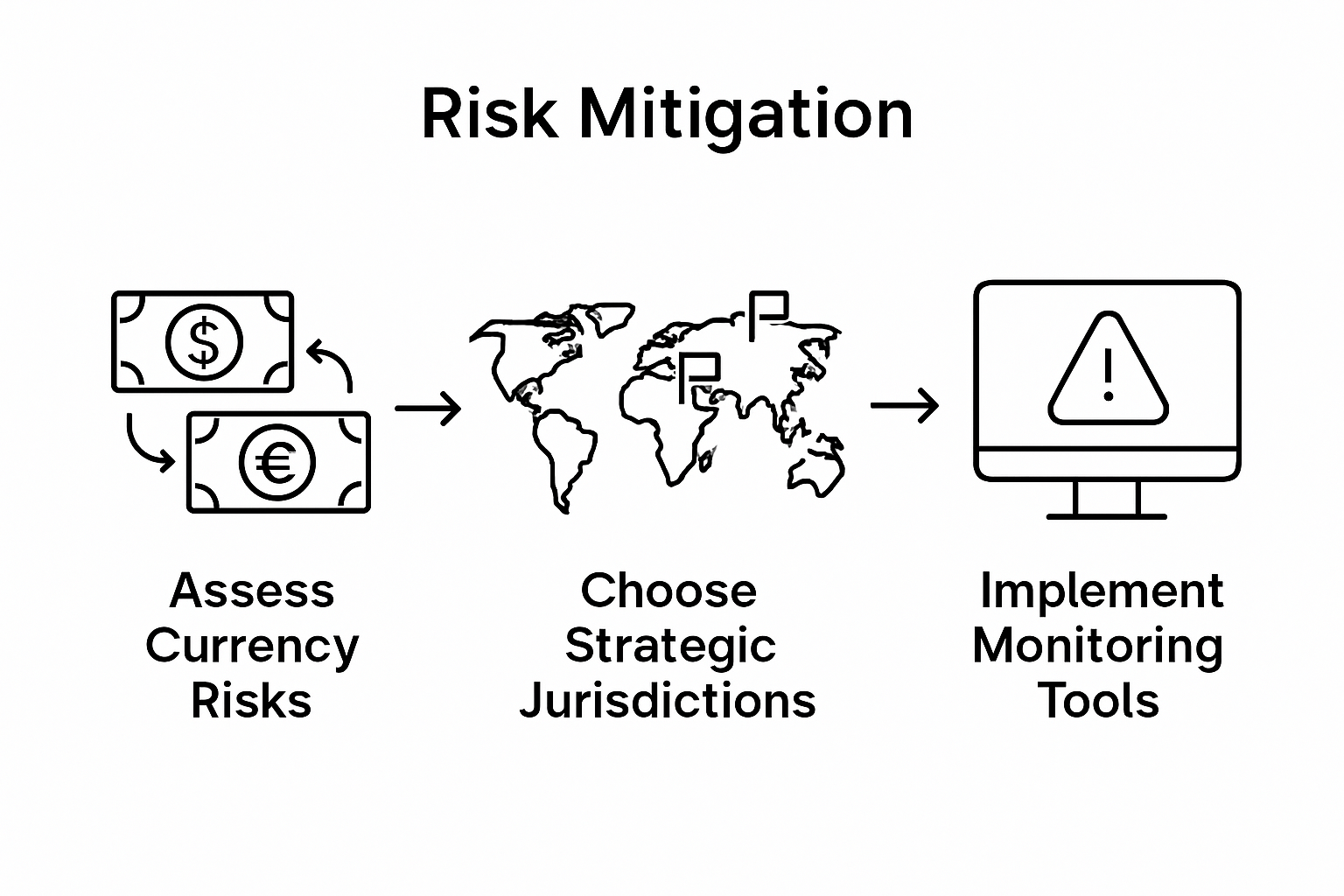
Consider exploring strategic jurisdictions that offer supportive regulatory environments for your risk management efforts. Some locations like the Cayman Islands provide family offices with secure frameworks for deploying capital and implementing bespoke investment strategies, which can significantly enhance your risk mitigation capabilities. Focus on building a dynamic risk management approach that can quickly adapt to changing global economic conditions, leveraging advanced analytics and predictive modeling to stay ahead of potential financial challenges.
Pro tip: Develop a real-time currency monitoring system that provides instant alerts about significant market movements. This proactive approach will allow you to make swift, informed decisions that protect your family’s wealth from sudden economic disruptions.
Step 4: Execute Cross-Border Transactions Securely
Executing cross-border transactions demands exceptional attention to detail and robust security protocols. Your primary objective is to create a seamless yet highly protected process for moving financial assets across international boundaries while minimizing potential risks and compliance vulnerabilities.
Begin by establishing a comprehensive verification framework that scrutinizes every aspect of your international financial transactions. This means implementing multiple layers of authentication that go beyond standard banking protocols. Utilize advanced encryption technologies, conduct thorough background checks on all transaction parties, and create a systematic approach to validating the legitimacy of each financial movement. Develop a standardized workflow that includes rigorous documentation requirements, digital signature verification, and real-time transaction monitoring systems.
Pay careful attention to the technological infrastructure supporting your cross-border transactions. Invest in secure financial platforms that offer end-to-end encryption, multi factor authentication, and sophisticated fraud detection mechanisms. Your transaction system should provide transparent audit trails, instant reporting capabilities, and the ability to immediately halt suspicious activities. Consider working with specialized international financial technology providers who understand the nuanced security challenges of global wealth management.
Pro tip: Implement a mandatory two person verification process for all transactions exceeding a predetermined monetary threshold. This dual authorization approach significantly reduces the risk of unauthorized financial movements and provides an additional layer of security for your family office’s cross-border investment strategy.
Step 5: Monitor Compliance and Optimize Performance
Continuous monitoring and performance optimization are critical for maintaining the health and effectiveness of your cross-border investment strategy. Your goal is to create a dynamic system that provides real-time insights and proactively identifies opportunities for improvement.
Family offices must maintain vigilant compliance practices, including required filings and meticulous record-keeping to insulate your investments from potential liabilities. Develop a comprehensive compliance dashboard that tracks regulatory requirements across all jurisdictions where you operate. This means implementing advanced analytics tools that can automatically flag potential compliance risks, monitor changing regulations, and generate detailed reporting on your investment performance. Create a systematic approach to documentation that ensures every transaction, communication, and strategic decision is thoroughly tracked and easily retrievable.
Implementing robust compliance programs and regular audits helps family enterprises enhance overall performance and maintain regulatory alignment. Establish a quarterly review process that combines comprehensive performance analysis with compliance assessment. Leverage predictive analytics and artificial intelligence technologies to identify potential performance optimizations and emerging risks before they become significant challenges. Focus on building a flexible monitoring system that can quickly adapt to changing global financial landscapes and regulatory environments.
Pro tip: Develop a centralized compliance and performance management platform that integrates data from all your investment channels. This unified approach will provide a holistic view of your family office’s financial ecosystem, enabling more informed and strategic decision making.
Master Cross-Border Investment Challenges with Trusted Family Office Solutions
Navigating complex regulatory landscapes and managing risks in cross-border investments can feel overwhelming for any family office. You face the critical challenge of ensuring compliance across multiple jurisdictions while safeguarding your family’s wealth from currency volatility and security risks. Concepts like establishing robust tax structures and real-time monitoring are key to success but require expert guidance and reliable connections.

Take control of your family office’s global investment strategy today by tapping into a vibrant community of experts and resources at Future Family Office. Access comprehensive directories of service providers, latest industry insights, and networking opportunities designed specifically for ultra-high-net-worth investors managing cross-border portfolios. Don’t wait for risks to escalate. Visit Future Family Office now and build the support system that keeps your family’s wealth secure and compliant across every market.
Frequently Asked Questions
What are the key regulatory requirements for cross-border investments in family offices?
Understanding regulatory requirements is crucial for cross-border investments. Start by mapping out the specific legal frameworks that govern your activities, and ensure compliance with regulations like the Family Office Rule and the Corporate Transparency Act.
How can family offices establish effective tax structures for international investments?
To create effective tax structures, analyze the tax reporting requirements for each jurisdiction where you hold assets. Map out taxation treaties and develop a systematic approach to document and report financial activities, potentially involving international tax specialists.
What strategies should family offices implement for currency risk management in cross-border investments?
Family offices should develop a multilayered currency risk management strategy that includes advanced financial instruments like currency forwards and options. Conduct a thorough analysis of your portfolio’s exposure to different currencies and implement real-time currency monitoring to adapt quickly to market changes.
How can family offices ensure secure execution of cross-border transactions?
Creating secure cross-border transactions involves establishing a comprehensive verification framework with multiple layers of authentication. Implement advanced encryption technologies and real-time transaction monitoring to safeguard against potential risks and maintain compliance.
What practices should be followed for ongoing compliance and performance optimization in cross-border investments?
Maintain continuous compliance by developing a compliance dashboard that tracks regulatory requirements and implements regular audits. Establish a quarterly review process that combines performance analysis with compliance assessment, utilizing predictive analytics to identify optimizations before they become significant challenges.
How can I effectively engage legal counsel for managing cross-border investments?
When seeking legal counsel, look for professionals with international expertise in family office regulations. Prepare by identifying specific compliance issues you need guidance on, and consider scheduling an initial consultation to discuss your family office’s unique investment landscape.