


Most american family offices face complex challenges when evaluating alternative investments, yet only about 45 percent have a clearly defined strategy guiding these high stakes decisions. The stakes are high as families seek growth, legacy, and stability in markets that shift rapidly. Understanding the right steps brings clarity, reduces costly errors, and helps unlock greater confidence when navigating the world of alternative investing.
Table of Contents
- Step 1: Define Investment Objectives And Constraints
- Step 2: Gather Relevant Market And Asset Data
- Step 3: Assess Potential Risks And Return Profiles
- Step 4: Analyze Manager Credentials And Track Record
- Step 5: Validate Due Diligence Findings And Decision Alignment
Quick Summary
| Key Insight | Explanation |
|---|---|
| 1. Define clear objectives | Establish specific investment goals to guide strategy. |
| 2. Utilize diverse data sources | Gather relevant market information for informed decisions. |
| 3. Assess risks thoroughly | Evaluate potential risks alongside expected returns. |
| 4. Analyze manager credentials | Review investment managers’ backgrounds and performance. |
| 5. Validate findings rigorously | Ensure due diligence aligns with investment objectives. |
Step 1: Define investment objectives and constraints
Defining clear investment objectives and constraints is the foundational blueprint for successful alternative investment strategies in family offices. This critical first step provides strategic direction and establishes guardrails for your entire investment approach.
Begin by conducting a comprehensive assessment of your family’s financial goals, risk tolerance, and investment horizon. Your objectives might range from wealth preservation and generational transfer to aggressive capital appreciation or targeted sector exposure. Strategic asset allocation requires understanding multiple dimensions beyond pure financial metrics.
Key considerations include liquidity requirements, tax efficiency, risk management, and alignment with your family’s broader financial philosophy. Create a detailed matrix that maps your investment goals against potential constraints such as investment size limits, geographic restrictions, sector preferences, and ethical investment criteria. For instance, some family offices prioritize sustainable investments or have specific restrictions around industries like tobacco or weapons.
Pro tip: Document your investment objectives with precision. A vague mission statement like “generate returns” is far less useful than a specific framework that outlines exact percentage targets, acceptable volatility ranges, and clear benchmarks for performance evaluation.
The next step involves translating these objectives into a structured investment strategy that can guide your alternative investment selections with confidence and clarity.
Step 2: Gather relevant market and asset data
Gathering comprehensive market and asset data is crucial for making informed alternative investment decisions in family offices. This step transforms raw information into strategic insights that will guide your investment approach.
Start by leveraging multiple data sources to build a robust intelligence framework. Family offices are increasingly collaborating with external partners to address expertise gaps in private market analytics and deal sourcing. This means accessing specialized research platforms, financial databases, industry reports, and market intelligence tools that provide deep sector specific insights.

Your data collection strategy should encompass multiple dimensions including macroeconomic trends, sector performance metrics, emerging market opportunities, and alternative asset class volatility. The evolving landscape of family offices demonstrates a growing preference for alternative investments across diverse geographical jurisdictions, making comprehensive data gathering more critical than ever.
Pro tip: Develop a systematic approach to data collection. Create a centralized repository that allows for easy comparison, trend analysis, and real time updates. Invest in sophisticated data aggregation tools that can synthesize information from multiple sources, enabling more nuanced investment decision making.
With your market and asset data compiled, you will be prepared to move forward to the next critical step of analyzing and interpreting these insights for strategic investment planning.
Step 3: Assess potential risks and return profiles
Assessing risks and return profiles is a critical step in alternative investment strategy that transforms raw data into actionable investment insights. This process helps you understand the potential financial outcomes and strategic implications of your investment choices.
Geopolitical risks are increasingly dominating family office investment considerations, with nearly 70% of North Asian family offices identifying geopolitical uncertainties as a key threat. Your risk assessment should go beyond traditional financial metrics to include comprehensive evaluations of geopolitical, economic, and sector specific risks that could impact your investment performance.
More than 60% of family offices have expanded their exposure to private equity and hedge funds, indicating a sophisticated approach to risk management. Develop a multidimensional risk assessment framework that considers volatility, liquidity, correlation with existing portfolio assets, downside protection potential, and alignment with your overall investment objectives.
Pro tip: Create a quantitative risk scoring system that assigns weighted values to different risk categories. This approach allows for more nuanced and objective evaluation of potential investments, helping you make data driven decisions that balance potential returns with comprehensive risk management.
With a thorough understanding of potential risks and return profiles, you are now prepared to move forward with more confident and strategic alternative investment selection.
Step 4: Analyze manager credentials and track record
Analyzing the credentials and track record of investment managers is a critical due diligence process that can significantly impact the success of your alternative investment strategy. This step helps you identify skilled professionals who can deliver consistent performance and align with your family office’s investment objectives.
Insights from academic research highlight the importance of understanding the underlying strategy and experience of investment managers. Your analysis should extend beyond surface level performance metrics to include a comprehensive evaluation of the manager’s professional background, investment philosophy, risk management approach, and demonstrated ability to navigate complex market environments.
The global family office landscape increasingly emphasizes rigorous manager selection processes as a key factor in investment success. Develop a systematic assessment framework that includes reviewing historical performance, conducting in depth interviews, checking regulatory compliance, examining peer comparisons, and understanding the manager’s specific expertise in alternative investment sectors.
Pro tip: Create a detailed scorecard that weights different evaluation criteria such as long term performance consistency, investment strategy alignment, operational transparency, and risk adjusted returns. This structured approach enables more objective and comprehensive manager assessment.
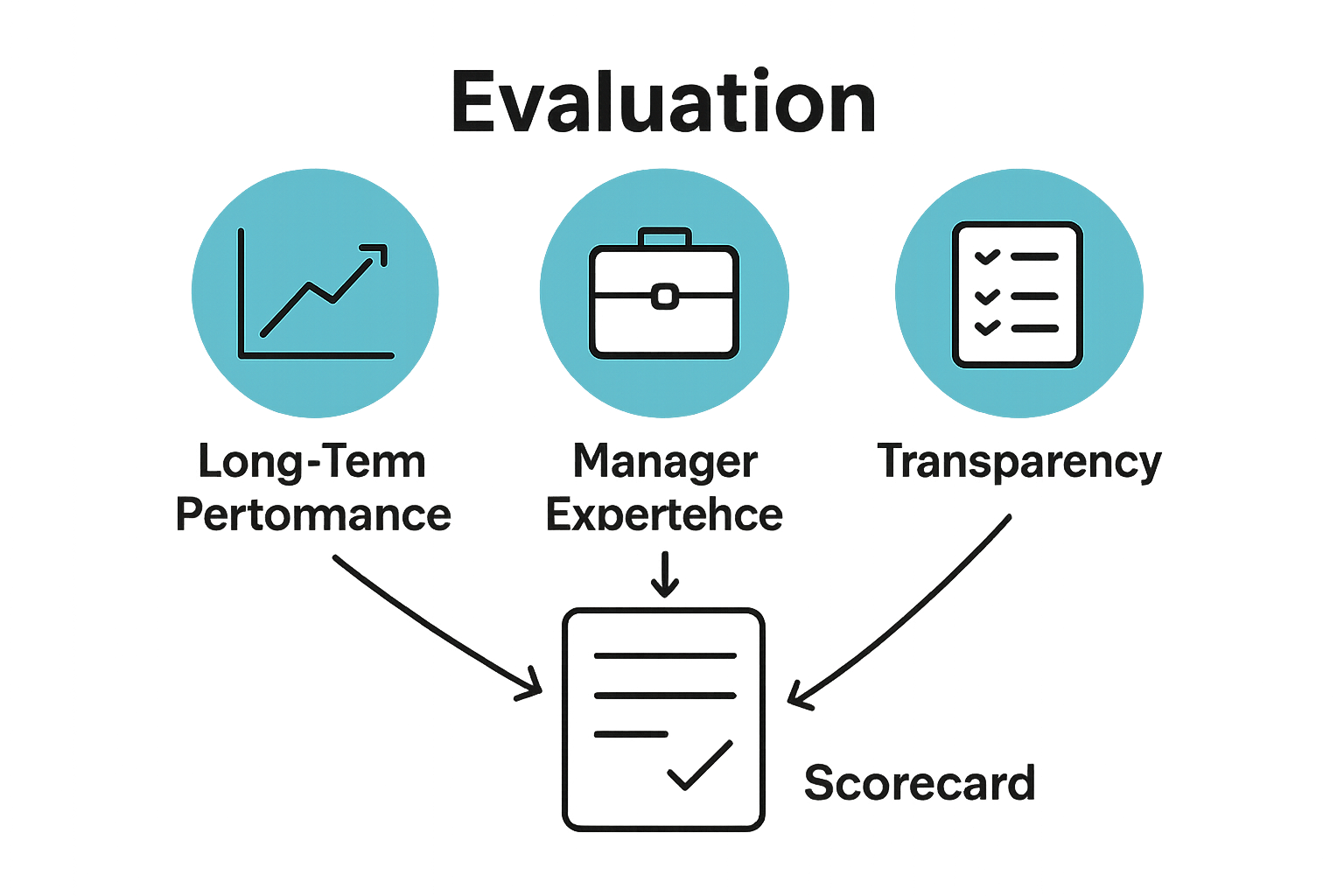
With a thorough understanding of potential investment managers, you are now prepared to move forward with selecting the most suitable partners for your alternative investment strategy.
Step 5: Validate due diligence findings and decision alignment
Validating due diligence findings and ensuring decision alignment is the critical final checkpoint in your alternative investment selection process. This step transforms your comprehensive research into a strategic investment decision that resonates with your family office’s core financial objectives.
Family offices require well defined investment policies that serve as a comprehensive framework for validating investment decisions. Your validation process should involve a meticulous cross reference of your due diligence findings against your original investment objectives, risk tolerance levels, and long term strategic goals. This means carefully examining whether potential investments truly meet the nuanced financial and philosophical requirements of your family office.
Develop a robust validation matrix that systematically compares your research findings against predefined criteria. This matrix should include quantitative metrics like expected returns and risk adjusted performance, as well as qualitative assessments such as strategic fit, management team compatibility, and alignment with your family’s ethical and social investment principles.
Pro tip: Implement a multi stakeholder review process that involves key decision makers from different perspectives within your family office. This collaborative approach helps mitigate individual bias and ensures a more comprehensive and balanced investment validation.
With your due diligence findings validated and aligned with your investment strategy, you are now prepared to execute your alternative investment decisions with confidence and strategic clarity.
Empower Your Family Office with Clear Investment Strategy Support
Navigating the complexity of evaluating alternative investments requires more than just knowledge it demands access to trusted connections and real-time industry insights. The challenge of defining precise investment goals, analyzing risk profiles, and validating due diligence can feel overwhelming without a community and resources that understand your unique family office needs. At Future Family Office, we help you overcome these hurdles by providing a dedicated platform designed for ultra-high-net-worth investors seeking transparency and expert collaboration.

Take control of your alternative investment decisions by joining a vibrant network where you can explore curated service providers, access expert articles, and connect directly with peers who share your commitment to strategic asset allocation and manager vetting. Visit Future Family Office now to unlock tools and insights that align perfectly with the evaluation process outlined in “How to Evaluate Alternative Investments for Family Offices.” Your next confident, well-informed investment move starts here.
Frequently Asked Questions
What are the first steps to defining investment objectives for family offices?
Defining investment objectives begins with conducting a thorough assessment of your family’s financial goals, risk tolerance, and investment horizon. Create a detailed matrix mapping your objectives against potential constraints like investment size limits and ethical considerations.
How can family offices effectively gather market and asset data?
Family offices can gather market and asset data by leveraging multiple sources such as financial databases, industry reports, and market intelligence tools. Establish a centralized repository to facilitate easy comparison and real-time updates on critical market trends.
What risks should family offices assess when evaluating alternative investments?
Family offices should evaluate a range of risks including geopolitical, economic, and sector-specific risks. Develop a multidimensional risk assessment framework that includes volatility and liquidity to ensure comprehensive risk management.
How do family offices analyze the credentials of investment managers?
Family offices can analyze the credentials of investment managers by assessing their professional backgrounds, investment strategies, and historical performance. Utilize a scorecard system to weigh different evaluation criteria, allowing for more objective assessments.
What is the process for validating due diligence findings in investment decisions?
Validating due diligence findings involves cross-referencing your research against predefined investment objectives and risk tolerance levels. Create a robust validation matrix that includes both quantitative metrics and qualitative assessments to ensure alignment with your family office’s goals.
How can a family office ensure a collaborative approach during investment decision-making?
Implement a multi-stakeholder review process that involves key decision-makers from different areas within your family office. This collaborative approach can help mitigate biases and ensure all perspectives are considered before finalizing investment decisions.