
Hong Kong is now home to 3,384 single-family offices (SFOs), having added 681 over the past two years, according to a new market study. These offices collectively employ more than 10,000 professionals and contribute an estimated HK$12.6 billion to the local economy each year through operating expenditure alone, highlighting the sector’s strong growth and economic significance.
Hong Kong’s broader asset and wealth management industry continues to perform robustly, with family offices playing an increasingly central role. As the sector matures and becomes more embedded in the wider economy, Deloitte has released new findings from a study commissioned by InvestHK, building on its 2023 baseline research. The report analyses capital flows, evaluates economic and social contributions, and captures stakeholder views on policy developments. It also identifies opportunities and areas for improvement to support Hong Kong’s ambition to remain a leading global hub for family offices.
According to Deloitte’s estimates, the number of SFOs in Hong Kong reached 3,384 by the end of 2025, up from the end of 2023. Survey and interview data show that these family offices originate from a wide range of regions and industries, underlining Hong Kong’s ability to attract capital across geographies, sectors and wealth tiers.
The study gathered insights from 136 market participants, including 121 family offices, of which 85 were SFOs and 36 were multi-family offices (MFOs), as well as banks and professional advisers. In addition, 21 in-depth interviews were conducted with family offices and key industry stakeholders between October and December 2025.
The findings indicate that intergenerational wealth transfer is well underway. More than half of surveyed SFOs have second-generation or later family members in leadership roles. As wealth transitions accelerate, Hong Kong is seen as well positioned to facilitate succession, supported by its straightforward tax regime and established professional services sector.
In terms of investment strategy, many SFOs are reducing exposure to the United States and placing greater emphasis on Hong Kong. Respondents also expressed positive sentiment towards Mainland China and the wider Asia-Pacific region. Sector-wise, technology and media, along with healthcare, are among the most attractive areas, with artificial intelligence standing out as a key theme. While public equities remain core holdings, alternative assets are becoming increasingly important. Private equity currently dominates this space, and interest in digital assets is growing. Similar patterns are observed among MFO clients.
All surveyed SFOs indicated that they plan either to increase or maintain their investments in Hong Kong over the next three years, with none intending to scale back. This reflects confidence in the city’s capital markets and recognition of their depth and maturity as a major draw for family offices.
Beyond investment activity, family offices make substantial economic and social contributions. Deloitte estimates that SFOs alone generate approximately HK$12.6 billion annually in local operating expenditure and directly employ more than 10,000 full-time staff. The total impact is likely higher when MFOs and related service providers are taken into account.
Operational spending includes office rent, salaries, utilities and asset management fees. A significant proportion of surveyed SFOs (74%) and MFOs (94%) intend to expand their Hong Kong operations. Many plan to hire additional staff, upgrade office facilities and adopt AI tools to improve efficiency.
Family offices also play an active role in philanthropy, particularly in education and healthcare. For many, this involvement extends beyond financial donations to include hands-on support and strategic guidance aimed at enhancing impact. Their engagement with the local education system is also evident, as family members and executives’ children attend schools in Hong Kong.
Hong Kong’s status as a leading family office destination is supported by both policy measures and structural advantages. Tax concessions are widely regarded as the most important government initiative for the sector. The current regime offers tax relief for family-owned investment holding vehicles managed by SFOs on qualifying investments. Planned changes in 2026 are expected to expand tax-exempt coverage to include digital assets, loans and private credit. In addition to tax incentives, government efforts focus on investment facilitation, talent attraction and ecosystem development.
Survey respondents highlighted tax efficiency as Hong Kong’s primary competitive advantage, followed by the strength of its capital markets. Proximity to Mainland China was also identified as a key differentiator, reinforcing Hong Kong’s role as a bridge between China and global markets.
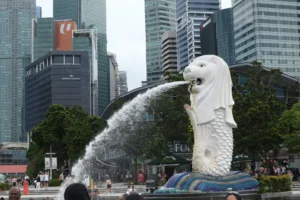
Interview feedback suggests that some families favour establishing SFOs in Hong Kong over Singapore, citing more streamlined frameworks for family office setup and residency applications.
Overall, the study concludes that Hong Kong’s family office ecosystem is shifting from pure growth in numbers to deeper integration of family capital, operating businesses and next-generation leaders into the city’s long-term development. By continuing to strengthen its talent base, infrastructure and professional networks, Hong Kong is seen as well placed to convert rising global interest into sustained leadership in the family office space.