


Over half of American family offices now oversee assets across multiple continents, facing compliance demands that grow more intricate every year. As family offices evolve into complex governance structures, risk management, technology, and changing regulations now shape every decision. This guide breaks down how modern American wealth stewards address compliance in 2025, unpacking key strategies and global trends that help protect both privacy and prosperity.
Table of Contents
- Defining Family Office Compliance Today
- Types of Compliance Structures in Family Offices
- Global Regulatory Frameworks and Developments
- Risk Management and Internal Controls
- Common Compliance Challenges and Solutions
Key Takeaways
| Point | Details |
|---|---|
| Evolving Compliance Landscape | Modern family offices require comprehensive compliance strategies that address technological, regulatory, and ethical challenges in a dynamic environment. |
| Adaptive Risk Management | Implementing proactive risk management frameworks is essential for safeguarding assets against legal and financial vulnerabilities. |
| Hybrid Compliance Structures | Utilizing a combination of centralized and decentralized compliance frameworks allows flexibility in navigating varied global regulations. |
| Technological Integration | Leveraging advanced technologies such as AI and real-time monitoring systems enhances compliance effectiveness and responsiveness to regulatory changes. |
Defining Family Office Compliance Today
Family office compliance in 2025 represents a sophisticated, multifaceted approach to managing complex wealth preservation strategies. Modern family offices are no longer simple wealth management platforms, but strategic governance ecosystems that integrate legal, financial, and operational risk management protocols. Governance principles now require comprehensive frameworks that address technological, regulatory, and ethical considerations simultaneously.
The transformative landscape of family office compliance demands proactive risk management strategies. According to research from IMD’s global family office report, family offices are increasingly viewed as strategic engines driving wealth preservation and generational financial planning. This evolution necessitates robust compliance structures that transcend traditional financial monitoring, incorporating sophisticated technological integration, cybersecurity protocols, and adaptive regulatory frameworks.
Key compliance dimensions for family offices in 2025 include sophisticated data protection mechanisms, transparent reporting systems, international regulatory alignment, and advanced technological infrastructure. Family offices must develop agile compliance models that can rapidly adapt to changing global financial regulations, integrate cutting-edge risk assessment technologies, and maintain impeccable documentation standards. These comprehensive approaches help mitigate potential legal and financial vulnerabilities while ensuring sustainable wealth management strategies.
Pro Compliance Tip: Develop a dynamic compliance ecosystem that combines technological monitoring tools, regular staff training, and quarterly comprehensive risk assessment reviews to stay ahead of emerging regulatory challenges.
Types of Compliance Structures in Family Offices
Family offices today navigate increasingly complex regulatory landscapes by developing sophisticated compliance architectures tailored to their unique operational needs. These structures range from centralized compliance frameworks to decentralized models that provide flexibility across multiple jurisdictions. Compliance strategies must now account for intricate international regulatory requirements that demand nuanced, adaptive approaches.
Cross-border compliance considerations have become paramount in designing effective governance models. The International Bar Association highlights the critical importance of developing compliance structures that can seamlessly navigate different regulatory environments. These structures typically include comprehensive risk management protocols, advanced technological monitoring systems, and robust documentation frameworks that ensure transparency and regulatory alignment across diverse operational contexts.
Modern family offices are increasingly adopting hybrid compliance models that integrate technology-driven solutions with traditional governance frameworks. These approaches often incorporate specialized compliance teams, automated regulatory tracking systems, and multi-layered risk assessment mechanisms. Regional variations play a significant role, with institutionalized family offices in the Middle East developing unique compliance structures that reflect local regulatory landscapes while maintaining global best practices.
Pro Compliance Architecture Tip: Implement a dynamic compliance framework with quarterly review cycles, leveraging both technological monitoring tools and human expertise to create an adaptive, responsive governance ecosystem that anticipates regulatory shifts and minimizes potential risks.
Here’s a concise comparison of common compliance structures found in modern family offices:
| Compliance Structure Type | Main Strength | Limitation | Best Use Case |
|---|---|---|---|
| Centralized Framework | Unified control, consistent policies | Limited flexibility in diverse regions | Single jurisdiction offices |
| Decentralized Model | Adaptable to local regulations | Harder to standardize policies | Multi-jurisdictional offices |
| Hybrid Approach | Balance of control and flexibility | Requires strong coordination | Global or complex organizations |
Global Regulatory Frameworks and Developments
Global regulatory frameworks have become increasingly complex, requiring family offices to develop sophisticated compliance strategies that transcend traditional jurisdictional boundaries. Investment insights from recent reports highlight the critical need for adaptive compliance mechanisms that can navigate the intricate landscape of international financial regulations.
The evolving regulatory environment demands comprehensive approaches to risk management and investment strategy. Global investment reports demonstrate that successful family offices are implementing multi-layered compliance frameworks that address geopolitical complexities, trade restrictions, and cross-border investment challenges. These frameworks must incorporate advanced technological solutions, real-time monitoring systems, and flexible governance models that can rapidly adapt to changing regulatory landscapes.
Key developments in global regulatory frameworks include enhanced transparency requirements, increased scrutiny of alternative investments, and more stringent anti-money laundering protocols. Family offices must now develop sophisticated compliance infrastructures that integrate advanced data analytics, comprehensive risk assessment tools, and proactive regulatory monitoring systems. This approach requires a holistic strategy that balances technological innovation with deep understanding of regional and international regulatory nuances.
Pro Global Compliance Tip: Develop a dynamic regulatory intelligence system that combines automated tracking technologies with expert legal insights, enabling your family office to anticipate and swiftly respond to emerging global regulatory challenges.
Risk Management and Internal Controls
Risk management has evolved from a peripheral function to a critical strategic imperative for family offices in 2025. The Global Family Office Report emphasizes the transformative approach required to safeguard complex wealth ecosystems, demanding comprehensive internal control mechanisms that go far beyond traditional financial monitoring.

Modern family offices are implementing multi-dimensional risk management strategies that integrate technological surveillance, predictive analytics, and human expertise. These advanced frameworks typically include sophisticated cybersecurity protocols, real-time financial monitoring systems, and comprehensive governance structures designed to identify and mitigate potential risks before they materialize. Key components include automated threat detection, regular compliance audits, and adaptive risk assessment methodologies that can respond rapidly to changing global economic landscapes.
The internal control architecture for contemporary family offices must address multiple risk domains simultaneously. This holistic approach encompasses financial risks, technological vulnerabilities, operational challenges, reputational considerations, and geopolitical uncertainties. Successful implementations leverage cutting-edge technologies such as artificial intelligence and machine learning to create predictive risk models, enabling proactive management rather than reactive responses. Family offices must develop flexible, integrated risk management systems that can seamlessly adapt to emerging global challenges while maintaining the highest standards of transparency and accountability.
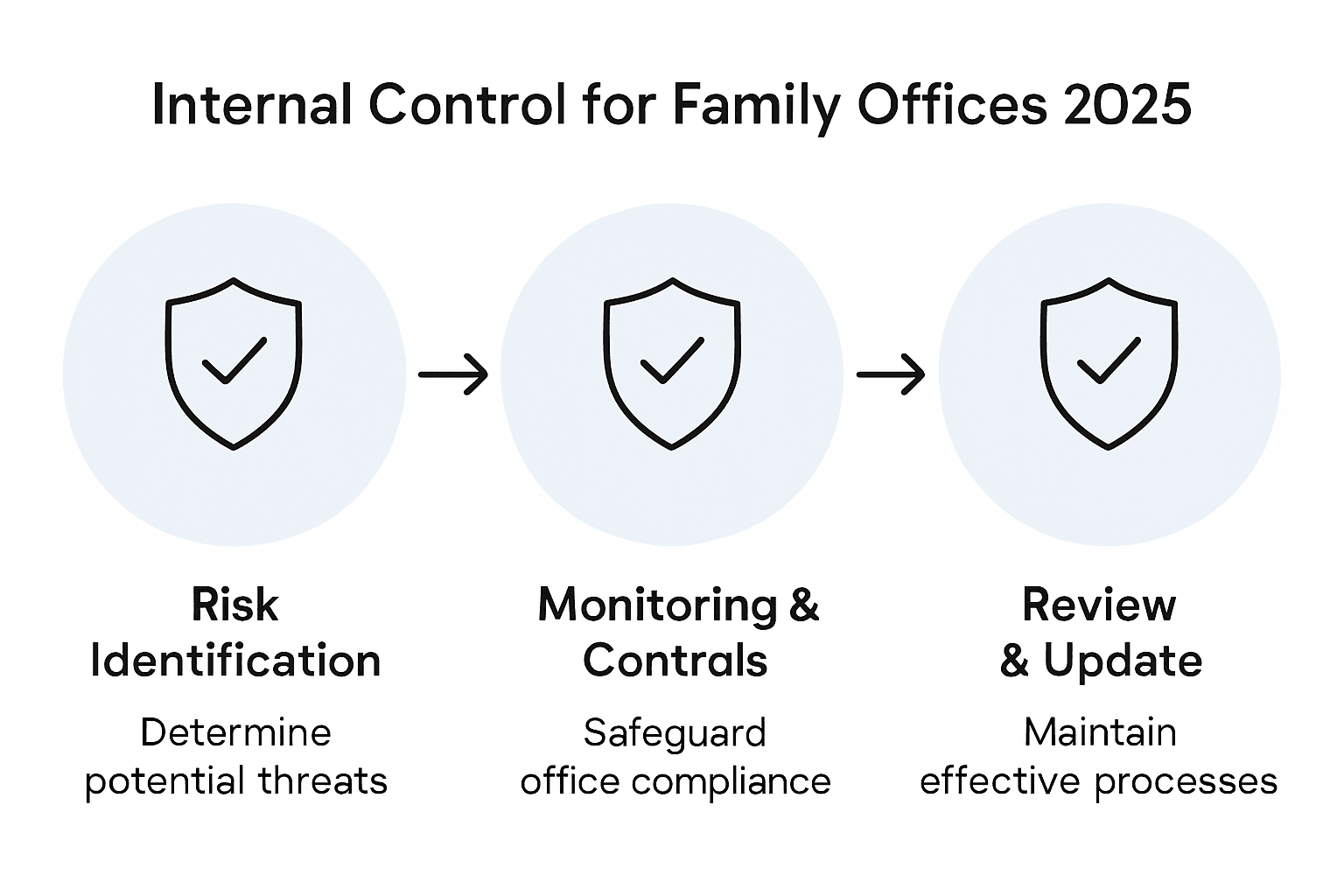
Pro Risk Management Tip: Create a dynamic risk assessment framework with quarterly comprehensive reviews, implementing cross-functional teams that combine technological monitoring with expert human analysis to develop a robust, anticipatory risk management ecosystem.
Common Compliance Challenges and Solutions
Family offices face increasingly complex regulatory landscapes that demand sophisticated and adaptive compliance strategies. Cross-border compliance challenges have become particularly nuanced, requiring comprehensive approaches that can navigate the intricate legal and regulatory environments across multiple jurisdictions.
The most prevalent compliance challenges emerge from three primary domains: technological vulnerabilities, regulatory divergence, and operational complexity. Institutional family office frameworks demonstrate that successful organizations develop multi-layered compliance solutions that integrate advanced technological monitoring, expert legal interpretation, and flexible governance structures. These solutions must address critical areas such as cybersecurity protocols, international tax compliance, anti-money laundering regulations, and comprehensive risk management strategies.
Effective compliance solutions require a holistic approach that combines technological innovation with human expertise. Modern family offices are implementing adaptive compliance frameworks that leverage artificial intelligence, machine learning, and real-time data analytics to create predictive compliance models. These advanced systems enable proactive risk identification, automated regulatory tracking, and seamless documentation processes that can rapidly adjust to changing global regulatory requirements while maintaining the highest standards of transparency and accountability.
Key compliance challenges and tailored solutions for family offices are summarized below:
| Challenge Domain | Typical Issue | Example Solution |
|---|---|---|
| Technological Risks | Cybersecurity threats, data breaches | AI-driven threat detection tools |
| Regulatory Divergence | Differing global regulations | Automated regulatory tracking |
| Operational Complexity | Managing various jurisdictions | Cross-functional compliance teams |
Pro Compliance Strategy Tip: Develop a dynamic compliance intelligence system that combines automated technological monitoring with specialized legal expertise, creating a flexible and anticipatory approach to navigating complex regulatory landscapes.
Strengthen Your Family Office Compliance Strategy for 2025
Navigating the complex world of family office compliance requires more than basic oversight. This article highlights critical challenges such as technological vulnerabilities, international regulatory shifts, and the urgent need for adaptive governance ecosystems. If your goal is to stay ahead of evolving global regulatory frameworks while mastering risk management and internal controls you need reliable tools and expert connections. Concepts like dynamic compliance models and proactive regulatory intelligence are key to preserving wealth and safeguarding your family office’s legacy.

Discover how you can transform compliance challenges into competitive advantages by joining the global community at Future Family Office. Our platform offers tailored resources, expert insights, and a comprehensive directory that connects you directly with industry-leading service providers and thought leaders. Start building an agile compliance framework today by exploring our news updates, accessing in-depth reports, and sharing knowledge with peers worldwide. Visit Future Family Office now and take a decisive step toward fortifying your family office’s compliance essentials for 2025.
Frequently Asked Questions
What is family office compliance in 2025?
Family office compliance in 2025 involves a comprehensive approach to managing wealth preservation strategies, integrating legal, financial, and operational risk management protocols to ensure robust governance frameworks.
What are the key compliance dimensions for family offices?
Key compliance dimensions include sophisticated data protection mechanisms, transparent reporting systems, international regulatory alignment, and advanced technological infrastructure to manage evolving compliance requirements.
How can family offices address common compliance challenges?
Family offices can address compliance challenges by implementing multi-layered compliance solutions that integrate advanced technological monitoring, expert legal interpretation, and flexible governance structures to navigate complex regulatory landscapes.
What are some effective risk management strategies for family offices?
Effective risk management strategies include developing dynamic risk assessment frameworks that leverage technology, conducting regular compliance audits, and creating predictive models to proactively manage potential risks.
Recommended
- 7 Essential Family Office Compliance Tips for Executives – Future Family Office
- Family Office Compliance Checklist for Effective Risk Management – Future Family Office
- Six Key Considerations for Family Offices in 2025 – Future Family Office
- 7 Essentials for a Complete Family Office Governance Checklist – Future Family Office