


Over 80 percent of American family offices use customized fund structuring to protect wealth and expand investment options. As private wealth grows more complex, understanding these sophisticated strategies matters to anyone managing multi-generational assets. This article shares how core principles and careful planning in fund structuring can provide legal protection, increase tax efficiency, and help American families achieve long-term financial resilience.
Table of Contents
- Defining Fund Structuring And Core Principles
- Common Fund Structures And Variations
- Key Legal And Regulatory Considerations
- Taxation, Reporting, And Cost Implications
- Risks, Liabilities, And Avoiding Pitfalls
Key Takeaways
| Point | Details |
|---|---|
| Fund Structuring Importance | Effective fund structuring enhances asset protection, tax optimization, and investment diversification for ultra-high-net-worth families. |
| Regulatory Considerations | Understanding legal and regulatory frameworks is crucial for compliance and building investor confidence while protecting financial interests. |
| Tax and Reporting Strategies | Proactively addressing taxation and reporting through careful structure selection maximizes returns and minimizes risks. |
| Risk Management Practices | Implementing comprehensive risk management strategies, including diversification and due diligence, is essential for safeguarding investments. |
Defining Fund Structuring and Core Principles
Fund structuring represents a sophisticated financial strategy that enables family offices to strategically organize investment vehicles, optimize tax efficiency, and manage complex wealth management objectives. At its core, fund structuring involves creating legal and financial frameworks that protect assets, facilitate investment diversification, and align with the unique goals of ultra-high-net-worth families.
The fundamental principles of fund structuring emerge from a critical understanding of structural separation between investment funds and managers, which enhances regulatory transparency and operational effectiveness. Key components of effective fund structuring include:
- Legal Entity Design: Selecting appropriate corporate structures like limited partnerships, limited liability companies, or trusts
- Tax Optimization: Strategically positioning investments to minimize tax liabilities
- Risk Management: Implementing robust governance frameworks to protect family wealth
- Investment Flexibility: Creating structures that allow dynamic asset allocation and diversification
Successful fund structuring requires a nuanced approach that balances legal compliance, financial efficiency, and strategic investment goals. Family offices must carefully evaluate their specific objectives, risk tolerance, and long-term wealth preservation strategies when designing investment fund architectures. By understanding these core principles, families can create resilient financial frameworks that adapt to changing market conditions and support intergenerational wealth management.
Common Fund Structures and Variations
Family offices employ diverse fund structures tailored to their specific investment strategies, risk profiles, and wealth management objectives. Understanding these variations allows for strategic asset allocation and enhanced financial flexibility. Impact of fund management structures on risk volatility demonstrates the critical importance of selecting appropriate investment frameworks.
Primary Fund Structures include:
- Limited Partnership (LP): Provides passive investment opportunities with limited investor liability
- Limited Liability Company (LLC): Offers flexible management and tax optimization capabilities
- Open-End Funds: Allow continuous investment and redemption
- Closed-End Funds: Feature fixed investment periods with limited investor entry points
The complexity of fund structures varies significantly across different investment categories. Mutual fund categorizations based on investment objectives reveal nuanced approaches to portfolio composition. These range from equity and fixed income funds to specialized vehicles targeting specific market segments or asset classes.

Successful family offices recognize that fund structuring is not a one-size-fits-all approach. Each structure demands careful consideration of regulatory requirements, tax implications, investor preferences, and long-term wealth preservation strategies. By comprehensively analyzing these variables, sophisticated investors can design fund architectures that maximize financial performance while maintaining robust risk management protocols.
Key Legal and Regulatory Considerations
Navigating the complex landscape of legal and regulatory frameworks is crucial for family offices establishing investment fund structures. Defining clear separation between investment funds and managers represents a fundamental principle in creating robust and compliant investment vehicles that protect both institutional and individual investors.
Critical Regulatory Domains include:
- Compliance Reporting: Maintaining transparent documentation for regulatory agencies
- Securities Regulations: Adhering to federal and state investment management guidelines
- Tax Compliance: Implementing structures that optimize tax efficiency while meeting legal requirements
- Investor Protection: Establishing clear governance mechanisms
Management structures significantly influence fund performance and risk management through precise legal frameworks that delineate operational responsibilities. This requires sophisticated understanding of jurisdiction-specific regulations, investor protection protocols, and comprehensive risk mitigation strategies.
Successful family offices recognize that legal and regulatory considerations are not static obstacles but dynamic opportunities for strategic positioning. By proactively understanding and integrating comprehensive regulatory frameworks, sophisticated investors can design fund structures that simultaneously maximize financial performance, ensure legal compliance, and maintain transparent governance protocols that build long-term investor confidence.
Taxation, Reporting, and Cost Implications
Taxation and reporting represent critical dimensions of fund structuring that directly impact financial performance and investor returns. Multiple fund management structures produce varying risk and cost implications, requiring sophisticated analysis and strategic planning by family offices to optimize their investment frameworks.
Key Taxation and Reporting Considerations include:
- Tax Efficiency: Selecting structures that minimize tax liabilities
- Reporting Transparency: Maintaining comprehensive documentation for regulatory compliance
- Cost Management: Analyzing direct and indirect expenses associated with fund operations
- Jurisdictional Variations: Understanding different tax treatments across investment locations
Mutual fund categorizations reveal complex investment objectives and corresponding reporting requirements, highlighting the importance of selecting appropriate fund structures. Sophisticated family offices must navigate intricate tax landscapes, balancing compliance obligations with strategic tax optimization strategies.
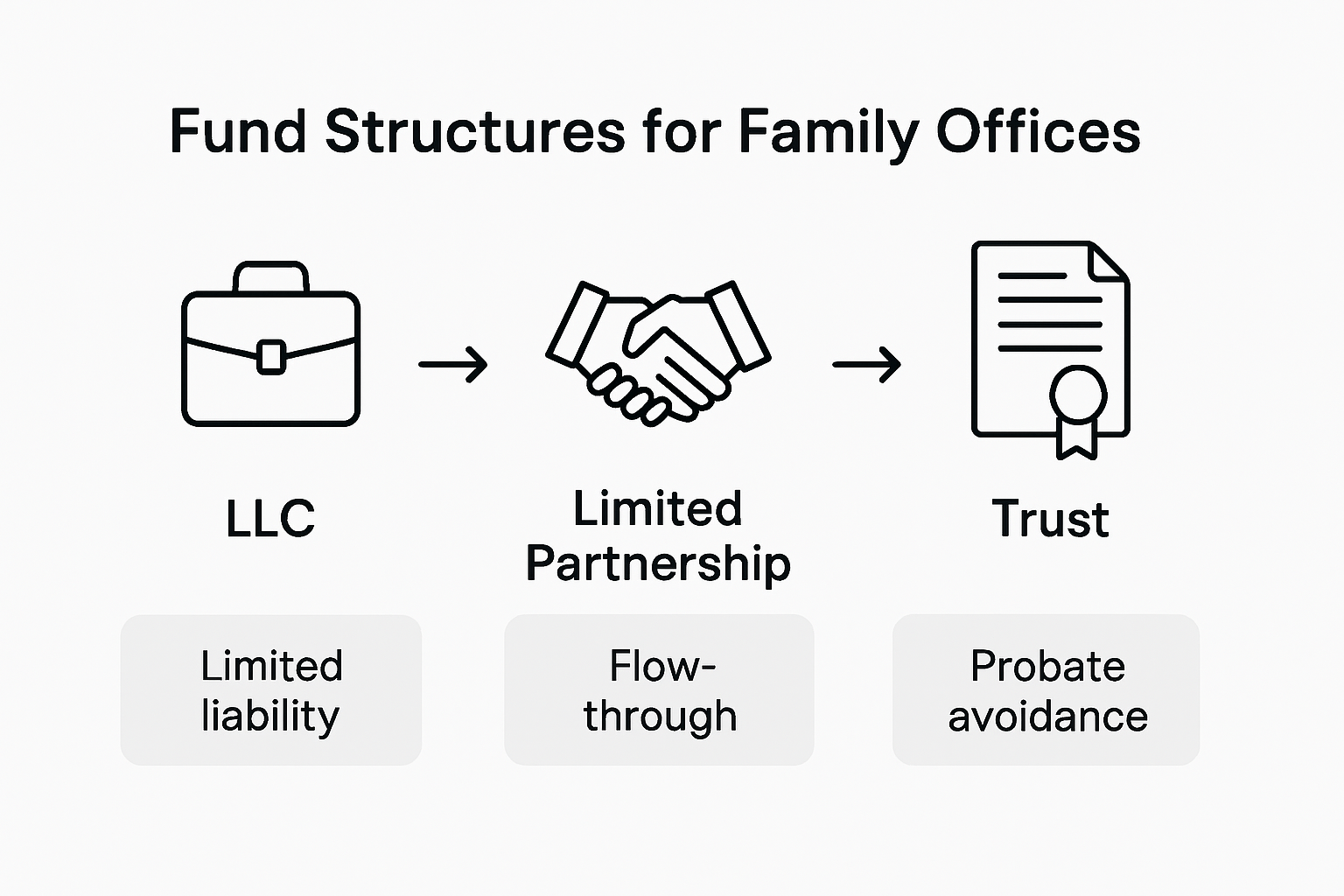
Successful fund management demands a holistic approach that integrates taxation considerations into broader investment strategies. By proactively addressing reporting complexities, implementing robust tax planning mechanisms, and maintaining meticulous financial documentation, family offices can create resilient investment structures that maximize returns while ensuring full regulatory compliance and minimizing potential financial risks.
Risks, Liabilities, and Avoiding Pitfalls
Navigating the complex landscape of investment fund structures requires a comprehensive understanding of potential risks and strategic mitigation techniques. Analysis of mutual fund investment networks reveals critical systemic vulnerabilities that family offices must carefully evaluate to protect their financial interests and minimize potential exposure.
Primary Risk Management Strategies include:
- Diversification: Spreading investments across multiple asset classes and sectors
- Due Diligence: Conducting thorough background checks on investment partners
- Continuous Monitoring: Implementing robust risk assessment frameworks
- Legal Protection: Establishing comprehensive liability limitation mechanisms
Examining asset commonality and investment strategies demonstrates the importance of understanding interconnected investment risks. Sophisticated family offices must develop nuanced approaches that go beyond traditional risk management, recognizing the complex interdependencies within financial ecosystems.
Successful risk mitigation requires a proactive and dynamic approach. Family offices must continuously adapt their strategies, leveraging advanced analytical tools and maintaining flexible investment structures that can quickly respond to changing market conditions. By implementing comprehensive risk management protocols, establishing clear governance mechanisms, and maintaining a forward-looking perspective, investors can create resilient fund structures that protect wealth while pursuing strategic financial opportunities.
Build Stronger Fund Structures with Future Family Office
Navigating the complexities of fund structuring requires more than just knowledge. Family offices face challenges like optimizing legal entity design, managing tax efficiency, and mitigating risks that can threaten intergenerational wealth. This article highlights key principles such as risk management, investment flexibility, and regulatory compliance that must be balanced to create resilient fund architectures.
At Future Family Office, we understand these critical pain points and provide a transparent platform dedicated to the global family office community and ultra-high-net-worth investors. Whether you are seeking expert insights on fund structuring, looking to connect with experienced service providers, or wanting to stay ahead of industry trends our community hub empowers you to make informed decisions. Explore specialized resources and foster relationships that address the complexities of taxation, reporting, and governance.

Take control of your fund structuring journey today. Visit Future Family Office to create your profile, access expert articles, and connect with trusted professionals who can help you build robust investment frameworks. Don’t let uncertainty put your wealth at risk discover the tools and networks that will secure your family’s financial legacy now.
Frequently Asked Questions
What is fund structuring in the context of family offices?
Fund structuring in family offices refers to the financial strategy used to organize investment vehicles, optimize tax efficiency, and manage complex wealth management objectives for ultra-high-net-worth families.
What are the key components of effective fund structuring?
The key components include legal entity design, tax optimization, risk management, and investment flexibility, all working together to create resilient financial structures.
How do different fund structures impact risk management for family offices?
Different fund structures, such as limited partnerships or LLCs, impact risk management through varying levels of liability, regulatory requirements, and governance mechanisms which are essential for protecting family wealth.
Why is tax optimization important in fund structuring?
Tax optimization is crucial in fund structuring as it helps minimize tax liabilities, allowing family offices to maximize their returns on investments while ensuring compliance with legal requirements.
Recommended
- Understanding Family Office Structure Explained in Detail – Future Family Office
- Private Wealth Structuring Steps for Optimal Asset Protection – Future Family Office
- How to Structure Co-Investments for Family Offices – Future Family Office
- Wealth Structuring Explained: Strategies, Tools, and Pitfalls – Future Family Office
- Cannabis Financial Reporting Guide for Full Compliance Success – Cannabis Business Minds