


Most American wealth management firms know that nearly 60 percent of organizations have no formal succession plan in place. Without a clear strategy, even the strongest institutions can lose client trust and struggle during leadership changes. Understanding how succession planning protects both business stability and generational wealth can give American professionals the insights they need to secure their firm’s long-term success.
Table of Contents
- Defining Succession Planning In Wealth Management
- Types Of Succession Planning Strategies
- Key Benefits For Family Offices And Investors
- Legal Considerations And Compliance Requirements
- Risks, Costs, And Alternatives To Succession Planning
Key Takeaways
| Point | Details |
|---|---|
| Succession Planning Importance | Succession planning is essential for maintaining organizational continuity and client trust during leadership transitions. It goes beyond personnel replacement to ensure strategic stability. |
| Talent Development Strategies | Effective succession planning includes internal development programs, external talent acquisition, and continuous performance management to build a robust leadership pipeline. |
| Legal and Compliance Framework | Organizations must implement comprehensive legal documentation and compliance measures to protect stakeholder interests and navigate regulatory landscapes effectively. |
| Risks of Neglecting | Failing to plan for succession can lead to significant risks, including loss of knowledge, decreased client confidence, and potential financial instability for wealth management firms. |
Defining Succession Planning in Wealth Management
Succession planning in wealth management represents a strategic blueprint for ensuring organizational continuity and preserving client relationships during critical leadership transitions. At its core, this process involves methodically preparing for the seamless transfer of leadership responsibilities, client portfolios, and institutional knowledge within financial firms and family offices.
The fundamental purpose of succession planning goes far beyond simply replacing key personnel. It encompasses a comprehensive approach to maintaining business stability, protecting client confidence, and safeguarding the long-term strategic interests of wealth management organizations. Proactive succession strategies are designed to mitigate potential disruptions that could emerge when senior leaders or key relationship managers depart.
Key components of effective succession planning typically include:
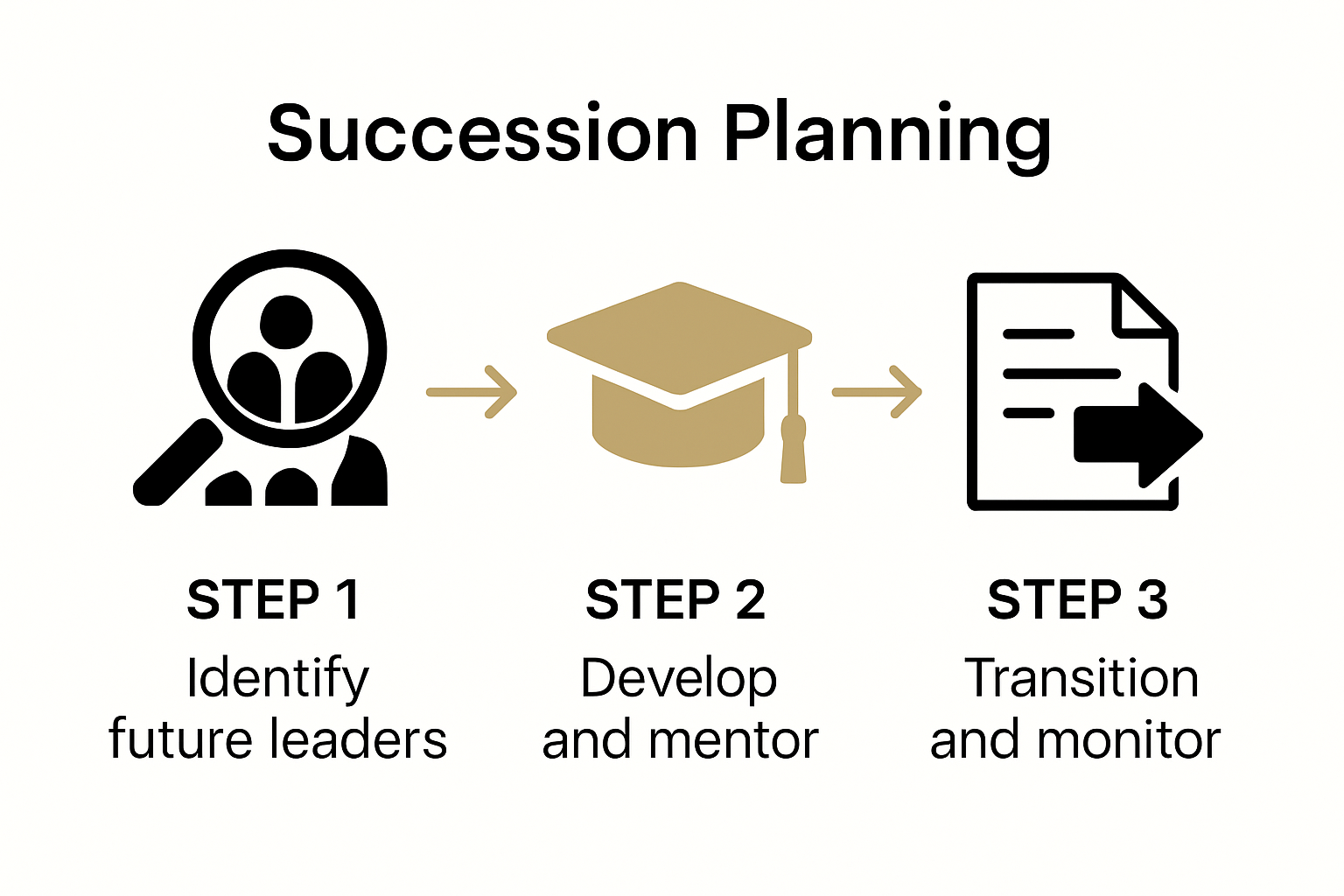
- Identifying and developing internal talent with leadership potential
- Creating structured mentorship and knowledge transfer programs
- Establishing clear protocols for client relationship continuity
- Developing comprehensive leadership transition frameworks
- Implementing robust training and professional development initiatives
Ultimately, successful succession planning requires a forward-thinking approach that anticipates potential leadership changes and prepares organizational infrastructure to adapt seamlessly. By prioritizing strategic talent development and maintaining transparent transition mechanisms, wealth management firms can ensure sustained performance, client trust, and operational resilience through potentially challenging leadership shifts.
Types of Succession Planning Strategies
Succession planning strategies in wealth management are multifaceted approaches designed to ensure organizational resilience and leadership continuity. These strategies go beyond simple personnel replacement, focusing on comprehensive talent development and strategic workforce planning that anticipates future organizational needs.

Organizational succession strategies typically encompass several key approaches that wealth management firms can implement to secure their long-term leadership pipeline. Strategic talent development involves a nuanced blend of internal cultivation and external recruitment techniques, each tailored to address specific organizational requirements.
Key succession planning strategies include:
- Internal Development Programs
- Identifying high-potential employees
- Creating targeted leadership training initiatives
- Establishing mentorship and knowledge transfer frameworks
- External Talent Acquisition
- Recruiting specialized professionals from the industry
- Developing robust recruitment networks
- Implementing comprehensive onboarding processes
- Continuous Performance Management
- Regular skills assessments
- Future-oriented role planning
- Proactive talent pipeline development
Effective succession strategies prioritize expertise and potential over traditional experience metrics. By creating a comprehensive succession ecosystem, wealth management organizations can ensure seamless leadership transitions, maintain institutional knowledge, and build a resilient workforce capable of adapting to evolving market dynamics. The most successful approaches integrate strategic talent development, continuous learning, and forward-thinking workforce planning to create a sustainable leadership infrastructure.
Key Benefits for Family Offices and Investors
Succession planning delivers transformative advantages for family offices and investors, extending far beyond traditional leadership transition strategies. By implementing comprehensive succession frameworks, organizations can protect their most valuable assets: intellectual capital, institutional knowledge, and generational wealth continuity.
Effective succession management fundamentally transforms organizational performance by creating structured pathways for strategic talent development and leadership renewal. Intellectual capital preservation becomes a critical strategic advantage, enabling family offices to maintain competitive edge and operational excellence through intentional knowledge transfer and talent cultivation.
Key benefits for family offices and investors include:
- Organizational Stability
- Minimizing leadership disruption risks
- Ensuring consistent strategic direction
- Maintaining investor and stakeholder confidence
- Talent Development
- Identifying and nurturing high-potential leaders
- Creating clear career progression pathways
- Implementing targeted leadership training programs
- Wealth Preservation
- Protecting multi-generational financial strategies
- Maintaining family business legacy
- Reducing risks associated with leadership transitions
Generational business longevity hinges on strategic succession planning that transcends mere personnel replacement. By prioritizing systematic knowledge transfer, continuous learning, and proactive leadership development, family offices can create resilient organizational ecosystems that adapt seamlessly to changing market dynamics while preserving core family values and strategic vision.
Legal Considerations and Compliance Requirements
Succession planning in wealth management demands rigorous legal and compliance frameworks that protect both organizational interests and individual stakeholders. Navigating the complex legal landscape requires a comprehensive approach that addresses multiple dimensions of regulatory and contractual requirements.
Legal documentation for succession planning involves several critical components that family offices must carefully prepare and maintain. Comprehensive legal instruments play a crucial role in establishing clear governance structures, including:
- Updated wills and trust documents
- Shareholder and partnership agreements
- Power of attorney designations
- Detailed inheritance and wealth transfer protocols
- Conflict resolution mechanisms
Key legal considerations encompass:
- Regulatory Compliance
- Adhering to financial industry regulations
- Maintaining transparent reporting standards
- Implementing robust governance frameworks
- Risk Management
- Identifying potential legal vulnerabilities
- Developing comprehensive risk mitigation strategies
- Ensuring legal protection for all stakeholders
- Documentation Integrity
- Creating legally binding succession agreements
- Maintaining updated organizational documents
- Establishing clear decision-making protocols
Formalizing succession strategies requires ongoing diligence and periodic review. Successful family offices recognize that legal compliance is not a one-time event but a dynamic process that demands continuous adaptation to changing regulatory environments and organizational needs.
Risks, Costs, and Alternatives to Succession Planning
Succession planning is not without its complex landscape of potential risks, financial implications, and strategic alternatives. Family offices and wealth management organizations must carefully navigate these multifaceted challenges to ensure sustainable leadership continuity and organizational resilience.
Organizational risks of neglecting succession planning can be devastating, potentially undermining years of carefully built institutional reputation and client relationships. Operational disruption risks include:
- Loss of critical institutional knowledge
- Unexpected leadership vacuums
- Diminished client confidence
- Potential financial instability
- Reduced competitive positioning
Cost considerations for succession planning encompass:
- Direct Financial Expenses
- Leadership training programs
- Recruitment and talent acquisition
- Comprehensive documentation processes
- Indirect Organizational Costs
- Potential productivity disruptions
- Knowledge transfer investments
- Performance management systems
- Strategic Investment Requirements
- Long-term talent development
- Continuous learning infrastructure
- Adaptive organizational frameworks
Alternative succession strategies provide flexible approaches for organizations unable to implement traditional internal succession models. These alternatives include strategic mergers, targeted acquisitions, practice sales, or collaborative leadership transition mechanisms that offer tailored solutions for unique organizational contexts.
Secure Your Family Office’s Future with Expert Succession Planning Support
Succession planning is a critical challenge for family offices and ultra-high-net-worth investors striving to preserve generational wealth and maintain organizational stability. The complex process of talent development, leadership transitions, and legal compliance demands strategic solutions that protect your legacy and reduce operational risks. By understanding key concepts such as intellectual capital preservation and leadership continuity, you can overcome common pain points like leadership disruption and loss of institutional knowledge.

Take control of your succession strategy today by connecting with a global network of family offices, service providers, and wealth management professionals. Explore tailored resources and trusted experts at Future Family Office to build a resilient succession framework that safeguards your long-term vision. Visit our platform now to start transforming your succession planning challenges into strategic advantages.
Frequently Asked Questions
What is succession planning in wealth management?
Succession planning in wealth management involves preparing for the seamless transfer of leadership responsibilities, client portfolios, and institutional knowledge within financial firms and family offices to ensure continuity during leadership transitions.
Why is succession planning important for wealth management organizations?
Succession planning is crucial for maintaining organizational stability, protecting client confidence, and safeguarding the long-term interests of wealth management organizations during transitions in key leadership roles.
What are the key components of an effective succession planning strategy?
Effective succession planning strategies include identifying and developing internal talent, structured mentorship programs, protocols for client relationship continuity, leadership transition frameworks, and ongoing training initiatives.
What legal considerations should family offices keep in mind during succession planning?
Family offices need to ensure compliance with financial industry regulations, maintain clear governance structures through updated legal documentation, and continuously assess potential legal vulnerabilities to protect stakeholders during succession planning.
Recommended
- Complete Guide to Succession Planning – Future Family Office
- 7 Key Succession Planning Strategies for Success – Future Family Office
- Master the Succession Planning Workflow for Family Offices – Future Family Office
- 7 Succession Planning Best Practices for Family Offices – Future Family Office
- Role of Growth Strategy: Complete Guide for B2B Leaders – Kadima